Blog #80
NAUVOO HOUSE
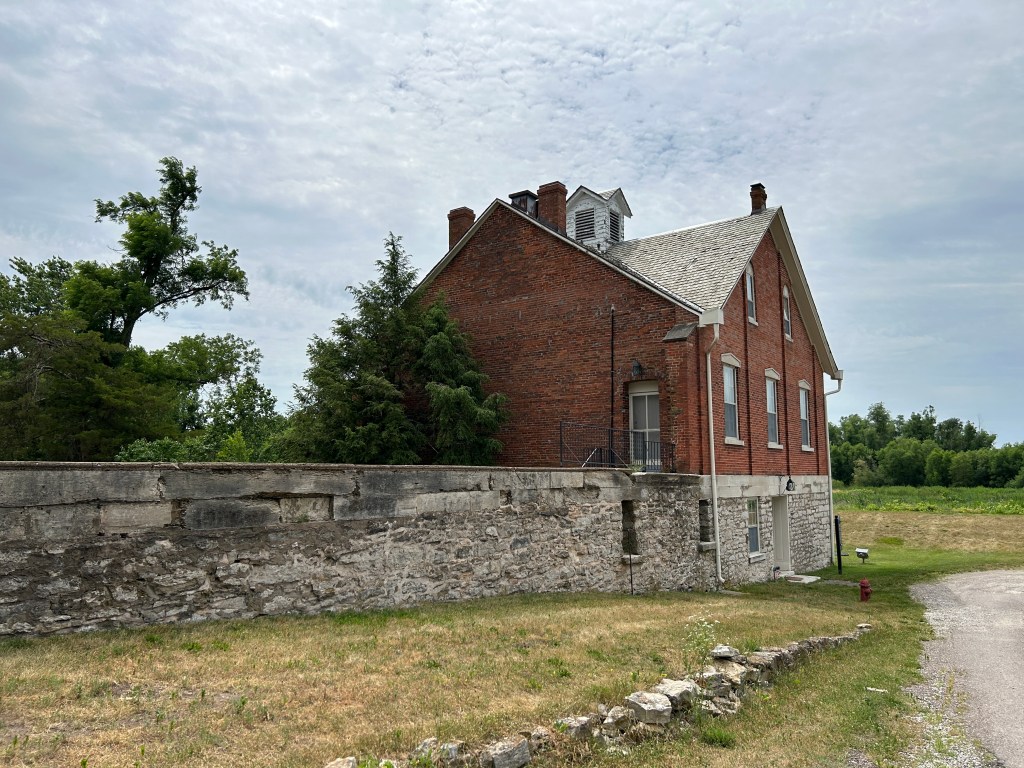
Recently my wife and I served as site guide missionaries in historic Nauvoo, I was constantly amazed at the interest with which our guests had in the historic Nauvoo House located across the street from the Joseph Smith properties.. Everyone seemed to want to know about it. Or they came with knoledge of the place and that knowledge wasn’t always correct. Seeing the Nauvoo House in person carried with it a certain mystique that captured the hearts of all who came. Other than the Nauvoo Temple (of 1846 and today), the Nauvoo House is perhaps the greatest Nauvoo Landmark (speaking of physical appearance and height).
In 1846, as the Saints departed for the West, the image of the Nauvoo House loomed prominent looking back on the Nauvoo scene from across the Mississippi River in Iowa. Still today the Nauvoo House remains prominent on the Nauvoo skyline.
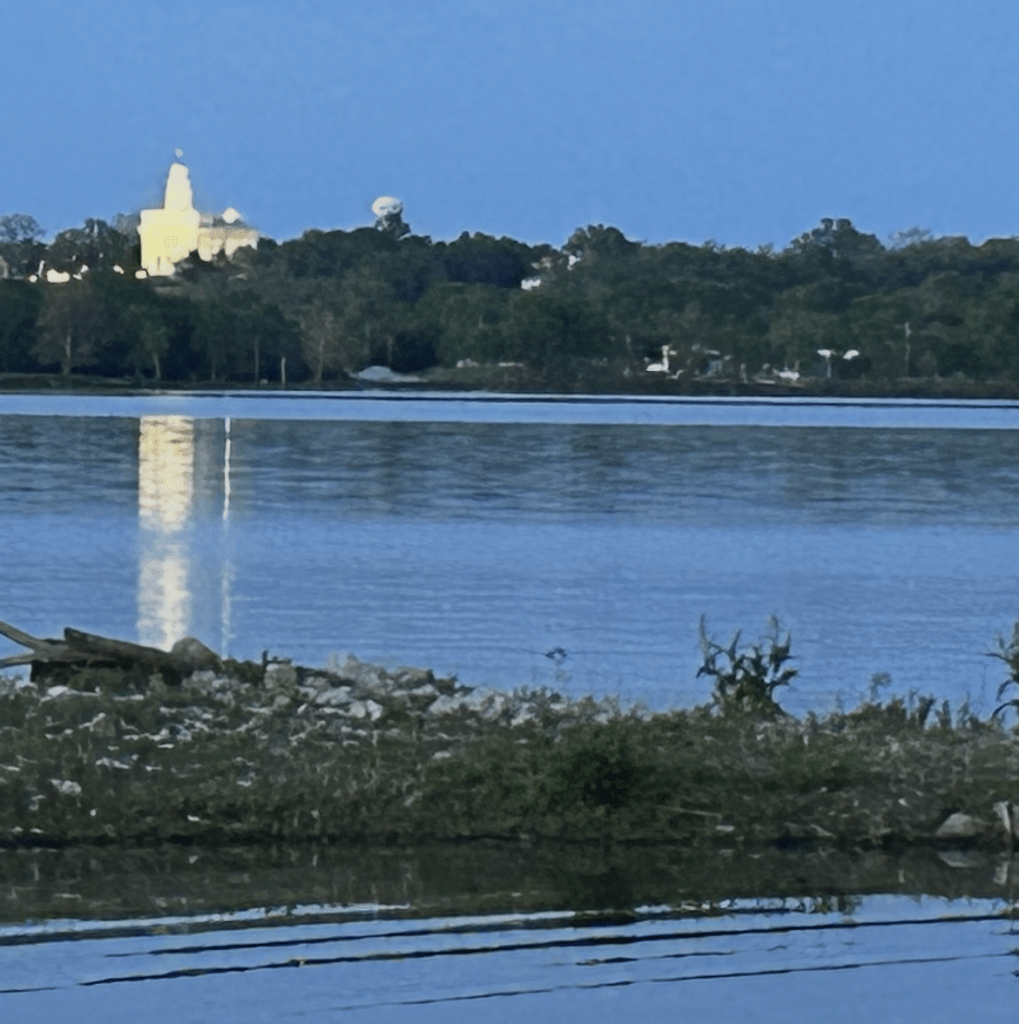
Above: View of Nauvoo (2025) from across the Mississippi River at Montrose, Iowa. Photo shows the Nauvoo Temple at right, and Nauvoo House is the building at far right. (Joseph Smith’s Mansion House – in White) is just to the left of the Nauvoo House. (Photo by Kevin and Lou Hunt)
Joseph Smith received the Lord’s vision for the Nauvoo House in a revelation he received on January 19, 1841. This is the same revelation wherein the “House of the Lord”, the Nauvoo Temple, was introduced:
Doctrine and Covenants Section 124:
22 Let my servant George, and my servant Lyman, and my servant John Snider, and others, build a house unto my name, such a one as my servant Joseph shall show unto them, upon the place which he shall show unto them also.
23 And it shall be a house for boarding, a house that strangers may come from afar to lodge therein; therefore let it be a good house, worthy of all acceptation, that the weary traveler may find health and safety while he shall contemplate the word of the Lord and the cornerstone I have appointed for Zion.
24 … And it shall be holy, or the Lord your God will not dwell therein.
25 And again, verily I say unto you, let all my saints come from afar.
26 And send ye swift messengers, and say unto them: Come ye, with all your gold, and your silver, and …
56 And now I say unto you, as pertaining to my boarding house which I have commanded you to build for the boarding of strangers. Let it be built unto my name, and let my name be named upon it, and let my servant Joseph and his house have place therein, from generation to generation.
60 And let the name of that house be called Nauvoo House, and let it be a delightful habitation for man, and a resting-place for the weary traveler, that he may contemplate the glory of this, the cornerstone thereof.
Organization for Construction and Funding:
62 Behold, verily I say unto you, let my servant George Milles, and my servant Lyman Wight, and my servant John Snider, and my servant Peter Haws, organize themselves and appoint one of them to be a president over their quorum for the purpose of building this house.
63 And they shall form a constitution, whereby they may receive stock for the building of that house.
64 And they shall not receive less than fifty dollars for a share of stock in that house, and they shall be permitted to receive fifteen thousand dollars from any one man for stock in that house.
65 But they shall not be permitted to receive over fifteen thousand dollars stock from any one man.
66 And they shall not be permitted to receive under fifty dollars for a share of stock from any one man in that house.
69 And if any pay stock into their hands it shall be for stock in that house, for himself, and for his generation after him, from generation to generation, so long as he and his heirs shall hold that stock, and do not sell or convey the stock away out of their hands by their own free will and act, if you will do my will, saith the Lord your God.
72 Verily I say unto you, let my servant Joseph pay stock into their hands for the building of that house, as seemeth him good; ….
118 And again, verily I say unto you, let no man pay stock to the quorum of the Nauvoo House unless he shall be a believer in the Book of Mormon, and the revelations I have given unto you, saith the Lord your God.
The Nauvoo House Association with the above listed officers was incorporated February 27, 1841 by the Illinois State Legislature. With legal status, Church members began to make donations (of time and materials) for the construction of the Temple and the Nauvoo House. These donations were received and recorded in “The Book of the Law of the Lord” by Joseph Smith’s scribes at his Red Brick Store.
The incorporation act also declared that Joseph Smith “and his heirs would hold a suite of rooms in perpetual succession” in the house because it was to be built on his property, something which the revelation also allowed.
BUILDING DESIGN:
Architect Lucien Woodworth designed a building that would have two large wings, each 120 feet long, 40 feet wide, and rising to over 4 stories tall; it was anticipated to have about 75 rooms – enough to accommodate some 300 visitors. Estimated cost was $100,000.
CONSTRUCTION BEGAN:
Just as the Saints needed to construct the Temple to show their obedience to God, they felt that they were also under a divine mandate to build the Nauvoo House. Construction of the house also provided employment to many who converted to the Church in the British Isles and who then emigrated to Nauvoo.
CONSTRUCTION MATERIAL: Basement is made of limestone. Upper floors are made of brick.
LAYING THE CORNERSTONE OF THE NAUVOO HOUSE:
“The Saints gathered for conference after the cornerstone ceremony of the Nauvoo House (see Doctrine and Covenants 124:22–24) on Saturday, October 2, 1841. Joseph Smith had held in his possession, the original manuscript of the Book of Mormon from 1829 when the translation was complete up to the time of the Cornerstone laying.
The Prophet decided to place the original manuscript of the Book of Mormon in the southeast cornerstone during the celebration. Warren Foote later recalled, “I was standing very near the corner stone when Joseph Smith came up with the manuscript of the Book of Mormon and said that he wanted to put that in there, as he had had trouble enough with it.” https://rsc.byu.edu/joseph-smith-prophet-seer/nauvoo-temple-1841
Though the early Saints thought this action would preserve the manuscript, the opposite happened. Over time, the documents became badly faded, obscured or otherwise damaged.
Additional items placed in the cornerstone included a journal of Heber C. Kimball, eight coins, a Bible, a hymnbook compiled by Emma Smith for the Church, The Times and Seasons #35, a copy of the Nauvoo House Cherter, Lyman Wight’s Petition of Missouri Persecutions, a copy of the 1841 D&C Section 124 Revelation, and published editions of the Book of Mormon, and the Doctrine and Covenants.
Historian Robin Scott Jensen (of the “Joseph Smith Papers” project later said, “To be fair to them, they sealed the cornerstone and poured molten lead around the seams, so they felt that it was a preservation,”
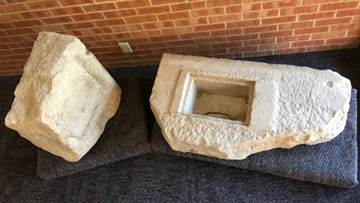
Above: The Nauvoo House cornerstone in which the Book of Mormon manuscript was placed. (Currently held by the LDS Church in Nauvoo. The stone is about 3’ long and 1-2’ high.)
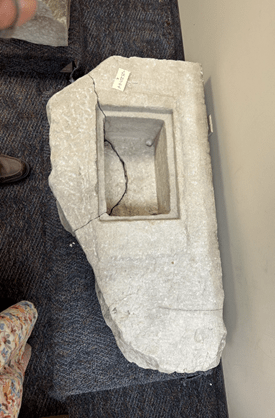
Above: The Nauvoo House cornerstone rock with the carved box which held the Book of Mormon and other historic documents. (Photo 2025 by Lou Dene Hunt)
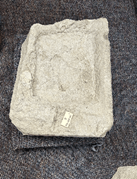
Above: Carved lid/top of the Nauvoo House cornerstone. (Photo 2025 by Lou Dene Hunt)
WORK ON THE NAUVOO HOUSE:
The Prophet’s diligent efforts to fulfill the Lord’s commandment meant that he had to prioritize his actions, focusing on the most important first. Reorganizing the priesthood quorums and preparing the Twelve to succeed him were the most important steps as the Prophet’s ministry was about to end. In March, 1844, just three months before his death, Joseph suspended work on the Nauvoo House to focus people and resources upon the Temple construction.
Joseph said, “We need the Temple more than anything else.”
DEATH AND BURIAL OF JOSEPH SMITH:
The Prophet Joseph Smith and his faithful brother, Hyrum, were martyred by a mob on Thursday, June 27, 1844 in the jail at Carthage, Illinois.
Following their deaths, their bodies were viewed by some 12,000 Saints in the Mansion House on Saturday, June 29. A public funeral was preached that same evening in the Grove near the Temple. William W. Phelps preached the funeral sermon. Following the funeral, a mock funeral procession was made to the Nauvoo (Pioneer) Cemetery. It appeared that the coffins and bodies were transported and buried there. In reality, however, the coffins were filled with sand bags – and these were buried in the cemetery. Their bodies remained with Emma and were hidden by her in the Mansion House. There were reports that malicious men wanted to steal the bodies.
“About midnight on 29 June, long after the mourners had retired, the coffins containing the bodies were taken from the Mansion House by Dimick B. Huntington, Edward Hunter, William D. Huntington, William Marks, Jonathan H. Homes, Gilbert Goldsmith, Alpheus Cutler, Lorenzo D. Wasson, and Philip B. Lewis. These men were guarded by James Emmet with his musket. They carried the coffins through the Mansion House garden, around the pump, and to the Nauvoo House. John Fidoe and Joseph Pulling dug the graves. The bodies were interred in the uncompleted basement structure of the Nauvoo House. After the burial the ground was flattened and covered with chips of wood, stone, and other rubbish to camouflage the site. That evening a violent rainstorm removed any trace of the burial.”
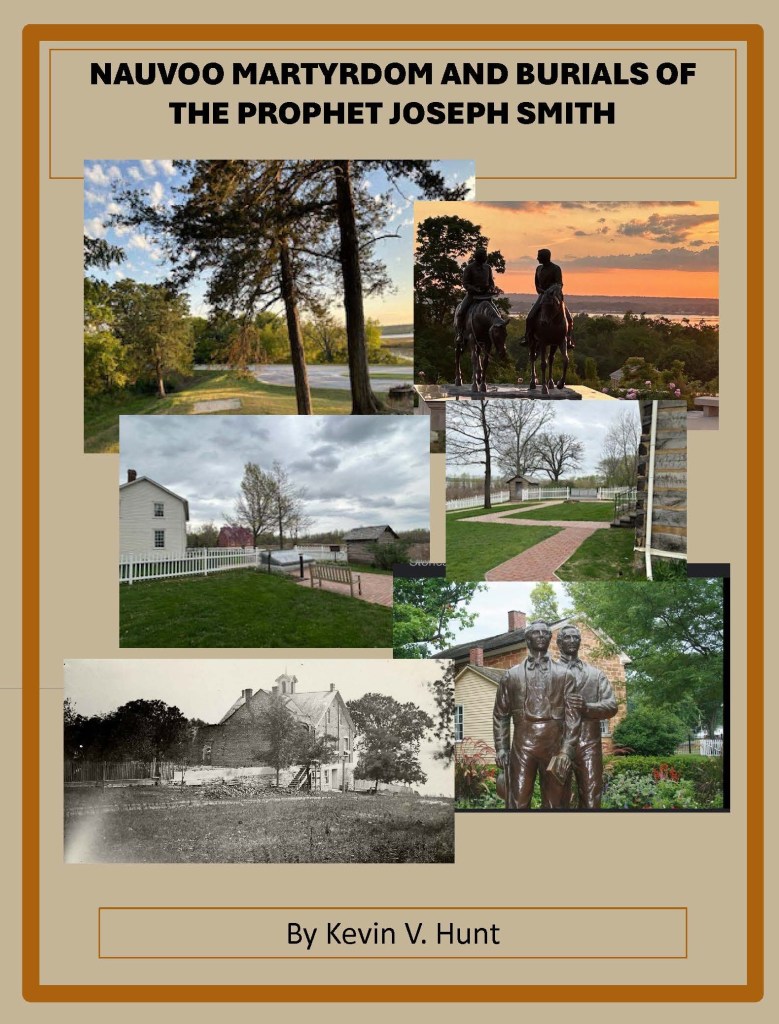
See the Kevin Hunt book, (available on Lulu.com):
(Source: 1857 Deseret News Article)
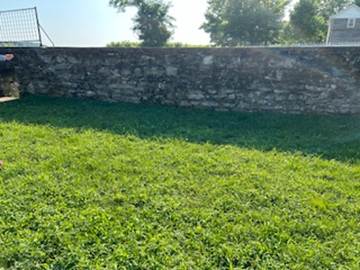
Above: The site where the bodies of Joseph and Hyrum were first buried (per Nauvoo historian, Joseph Monsen. The Nauvoo House foundation wall (still intact) is shown looking west toward the Joseph Smith Homestead. (Photo by Kevin and Lou Dene Hunt 2024)
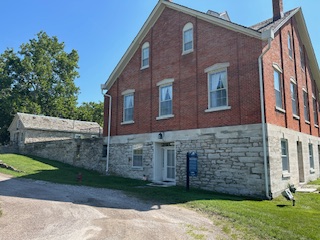
Above: Photo of the Nauvoo House, showing the original foundation extending north (originally 120 feet) from the SW corner of the building to the Bidamon structure. (Photo by Kevin Hunt 2024)
The bodies remained in the cellar of the Nauvoo House, where they were buried, until the fall, when they were removed by Dimick H. Huntington, William D. Huntington, Jonathan Holmes, and Gilbert Goldsmith, at Emmas request to the SE corner behind the Joseph Smith Homestead.
COMPLETION OF THE NAUVOO HOUSE
After the death of Joseph Smith, his widow, Emma retained title of ownership for the Nauvoo House.
in 1845, and following Joseph Smith’s death, Brigham Young directed efforts to continue constructing the Nauvoo House, a boarding house, with over 270 men working on it.
Brigham Young said, “The Lord commanded that the Nauvoo House be built and we have sent out men to fetch in the means to do it.”
He further stated, “there are sacred records deposited in the foundation of that house and it is our duty to build the house and cover up those records.”
On March 25, 1845, the committee reported that 2,377 stock certificates had been issued, 348 had been sold, 272 certificates were noted as “missing” and the trustees still held 1,773.
On April 7, 1845, the stockholders of the Nauvoo House Association met and George A. Smith and Amasa Lyman were appointed as the new trustees replacing Lyman Wight and George Snider.
That afternoon, the Church met in general conference and Brigham raised the subject of the Nauvoo House. He asked members to purchase one share of stock in the house. When Brigham asked who was willing to complete the Nauvoo House, “every hand was raised in the congregation.” The “Book of the Law of the Lord” was reopened at the Red Brick Store for additional stock purchases.
The project was in competition with the Nauvoo Temple for resources, often taking a backseat, and remained unfinished. The two-story shell was left with no roof.
As the Saints prepared to make the Exodus West, Brigham Young declared that he wanted to leave a group of men in Nauvoo to finish the Temple and perhaps also the Nauvoo House. He even pledged leaving all of his personal property to finish the two houses. He noted that completion of the buildings “would stand as monuments of the industry of this people”.
Nonetheless, The Nauvoo House remained unfinished. By October 1845, Willard Richards reported that the walls now approached “nearly the third story about the basement” but that may have been an exaggeration.
The Nauvoo House was never completed.
Development of the Nauvoo House following the exodus of the Saints west:
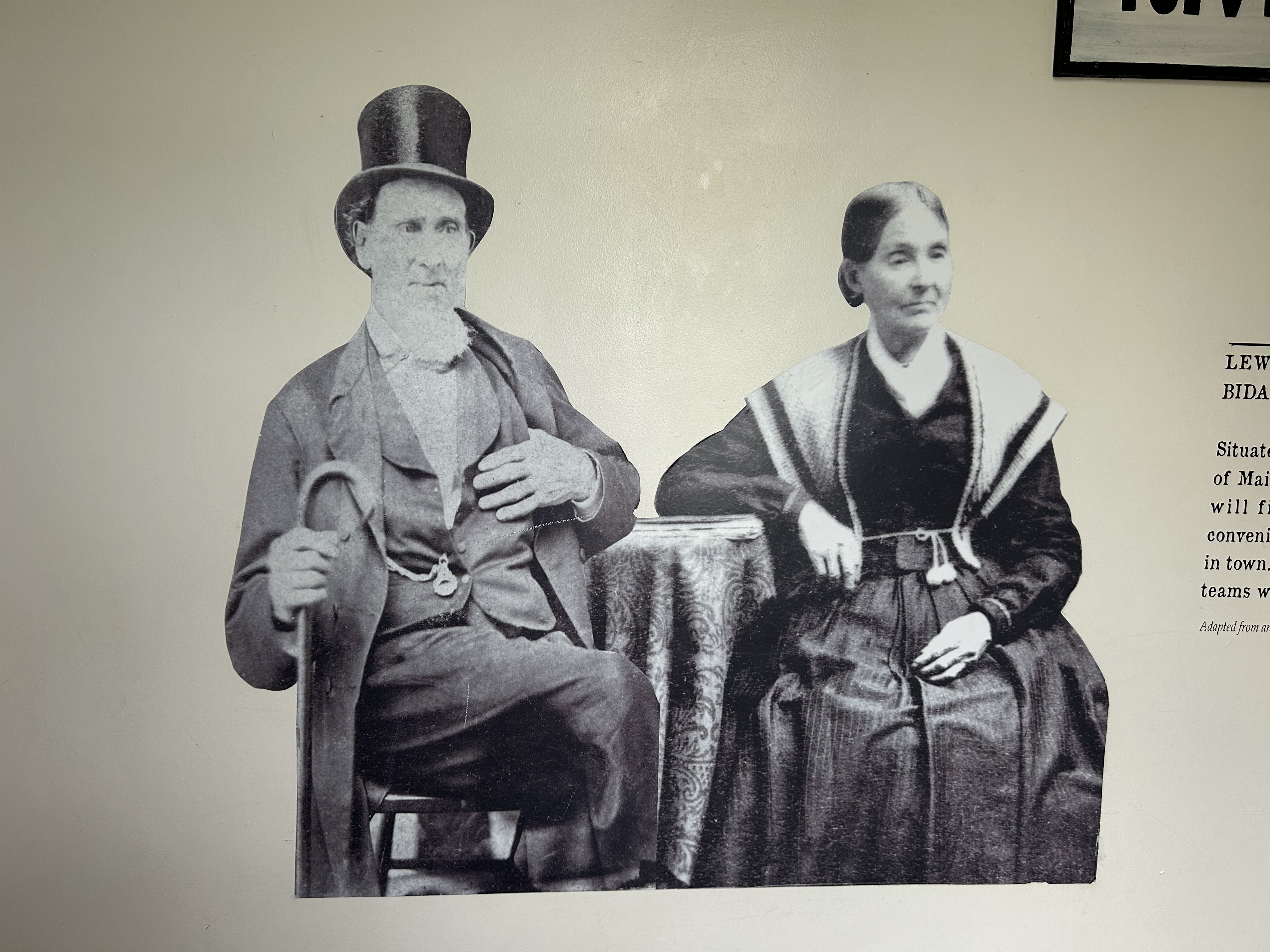
Beginning in 1867, Emma Smith and her second husband, Lewis C. Bidamon, took materials from the unfinished building and converted the unfinished, 3-story Nauvoo House into a smaller hotel which they called the Riverside Mansion. Bidamon tore down parts of the original structure (including the foundation) to use as materials for the Nauvoo House, and he and Emma lived in and managed the new, smaller hotel until Emma’s death.
Bidamon also used limestone from the original limestone foundation of the Nauvoo House and built a small structure to the north of the Nauvoo House. He reportedly used this Bidamon Structure as a horse stable.
Death of Emma Smith in the Nauvoo House
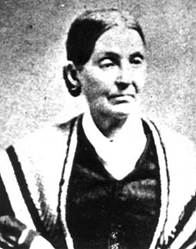
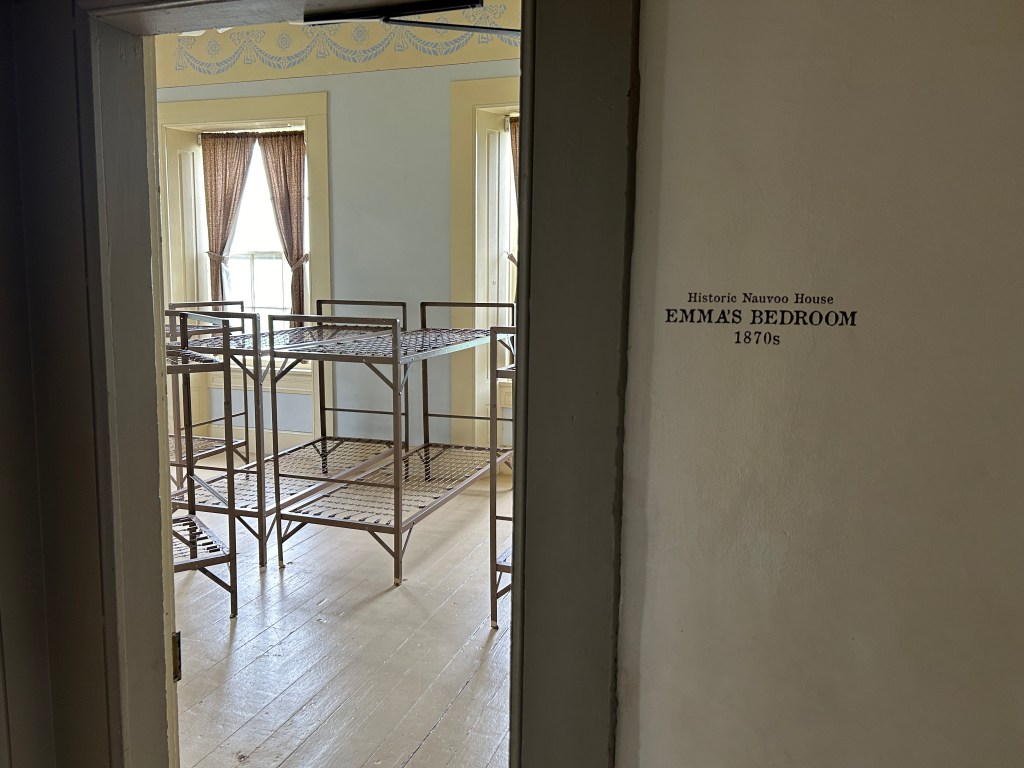
Emma Smith continued to live in the Nauvoo House until she died in her upstairs bedroom of the place on April 30, 1879. Emma’s funeral was held in the Nauvoo House in the large gathering room downstairs.
Excavation of the Nauvoo House and the finding of the Book of Mormon manuscript:
After the death of Emma Smith, in 1879, Bidamon excavated the Nauvoo House cornerstone. The cornerstone was opened by Lewis Bidamon in 1882. Within the cornerstone (giant rock), he found the Book of Mormon manuscript. This was some 40 years after the manuscript had been placed within the stone.
The documents had deteriorated substantially. Water had seeped into the hollowed-out cavity of the stone. And Bidamon gave away fragments of the manuscript as souvenirs to several visitors to Nauvoo as the years passed.
The book was widely scattered through the years. Of the nearly 500 pages placed in the Nauvoo House cornerstone, portions of 232 pages survive. The Church now possesses most of those fragments and leaves. Others are in private hands.
OWNERSHIP OF THE NAUVOO HOUSE FOLLOWING THE DEATH OF EMMA SMITH:
Following Emma Smith’s death in 1879, ownership of the Nauvoo House property passed to her husband, Lewis C. Bidamon. It remained in the Bidamon family until 1909. The Bidamon family subsequently sold the property to the Reorganized Church of Jesus Christ of Latter Day Saints (now known as the Community of Christ) in 1909.
NAUVOO HOUSE PHOTOS:
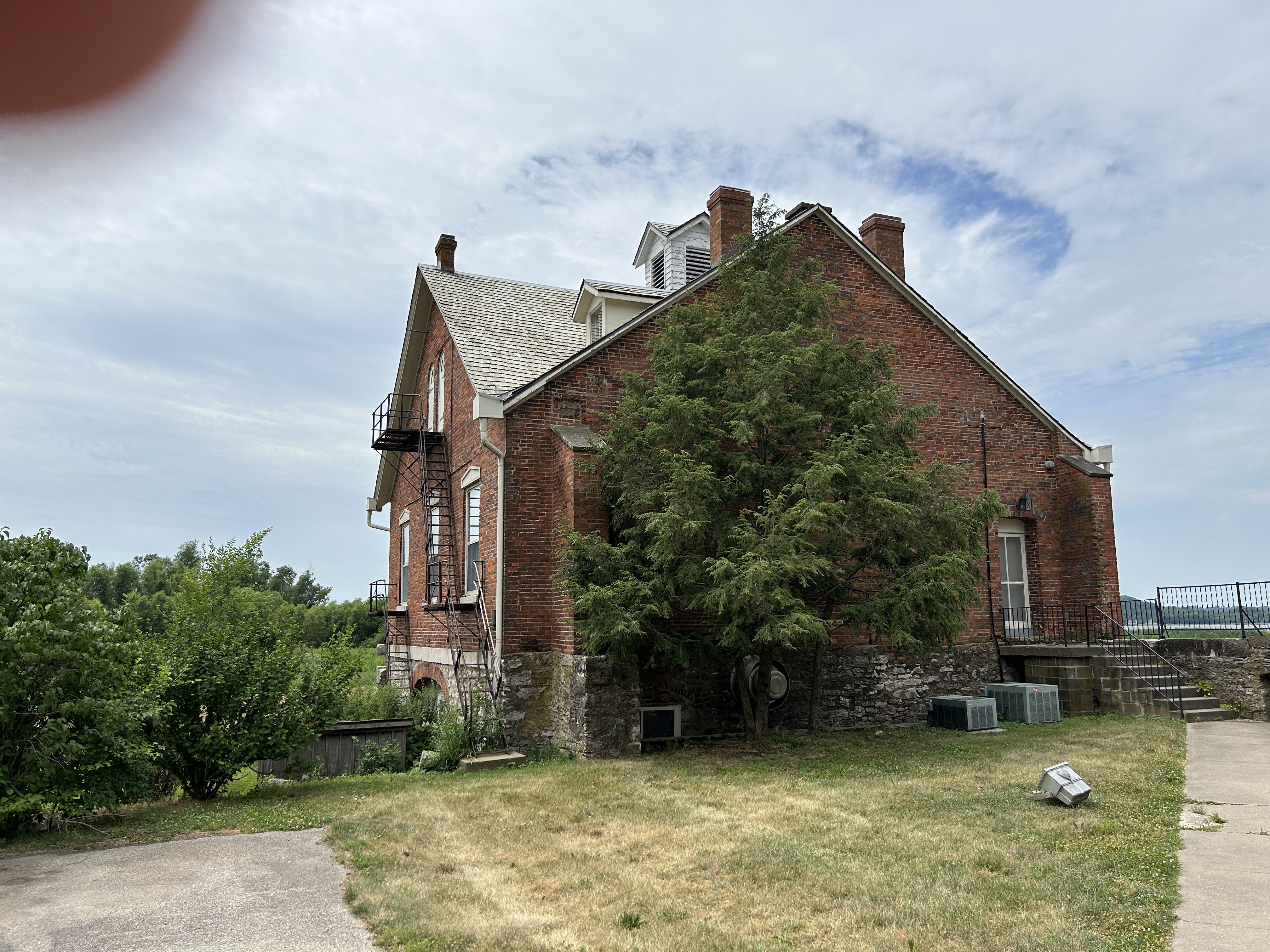
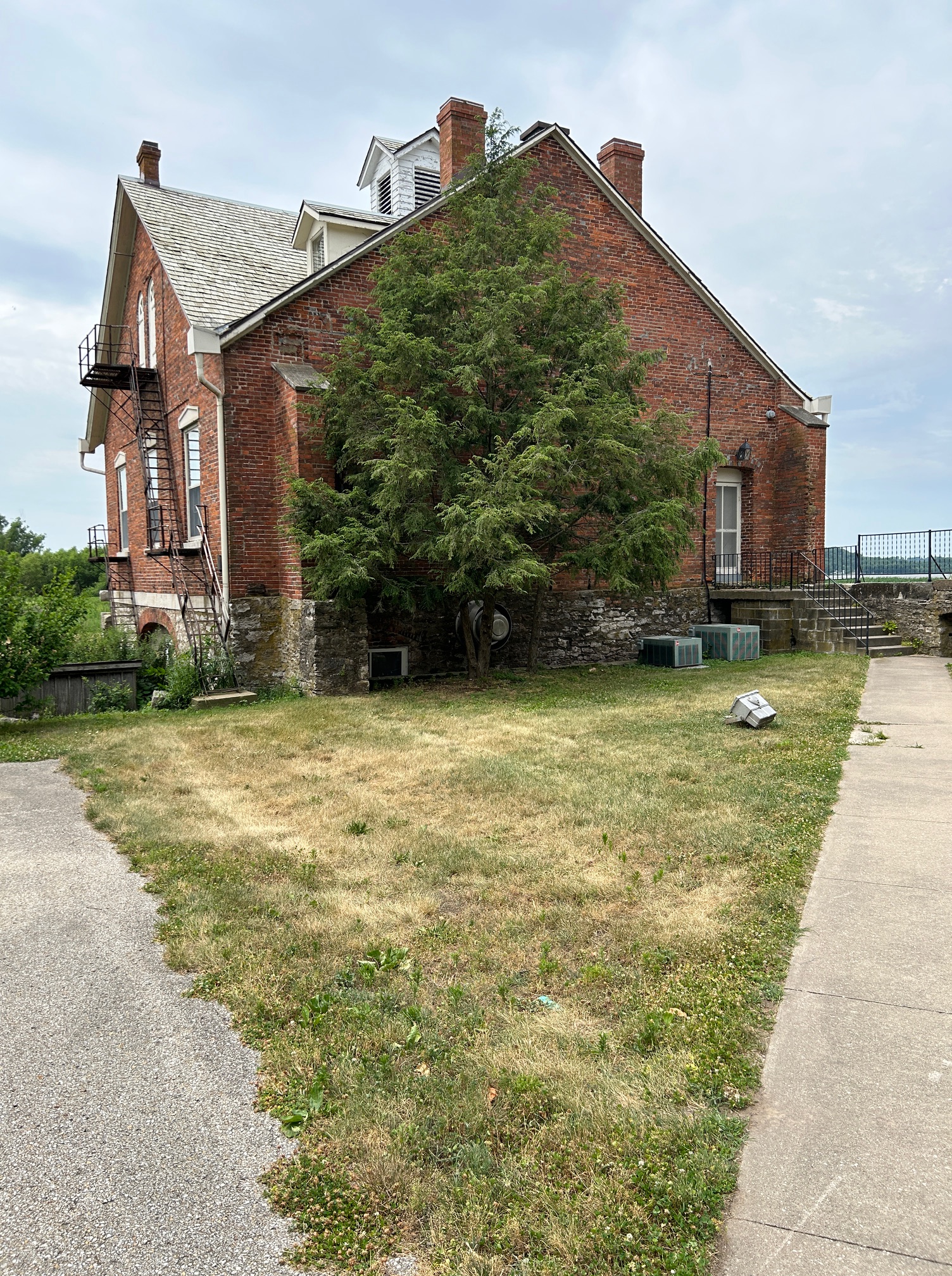
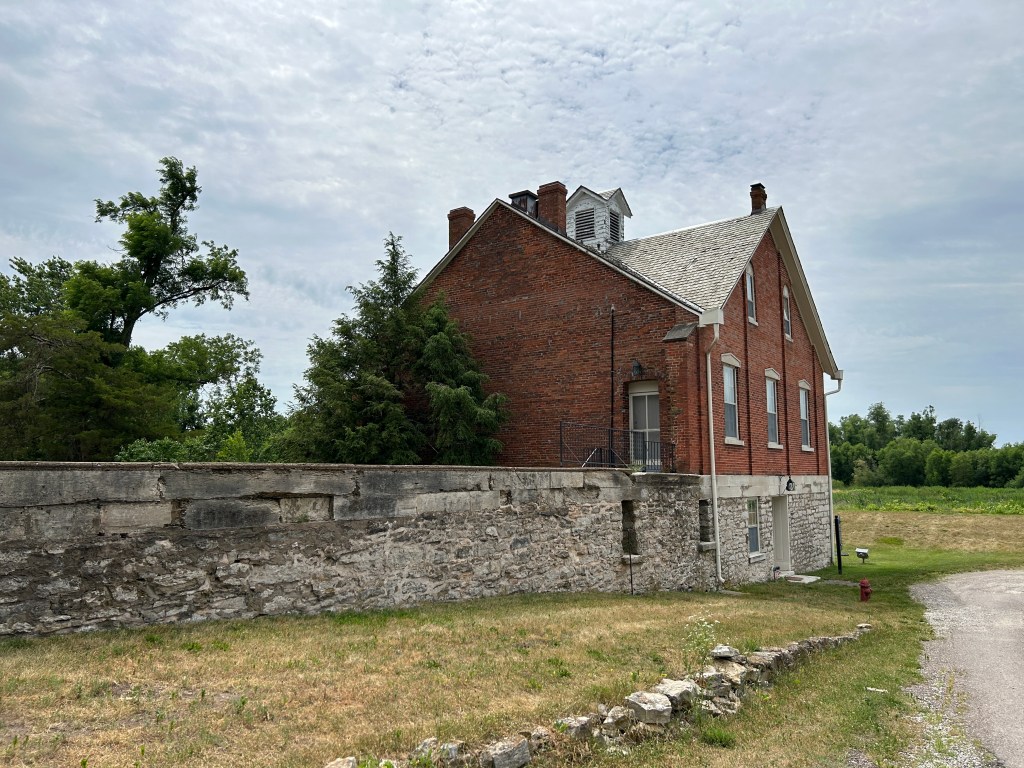
Above: Nauvoo house from NW. Includes full view of the original limestone basement (north to south) with the brick structure on top.
LDS AND COMMUNITY OF CHRIST USE OF THE NAUVOO HOUSE:
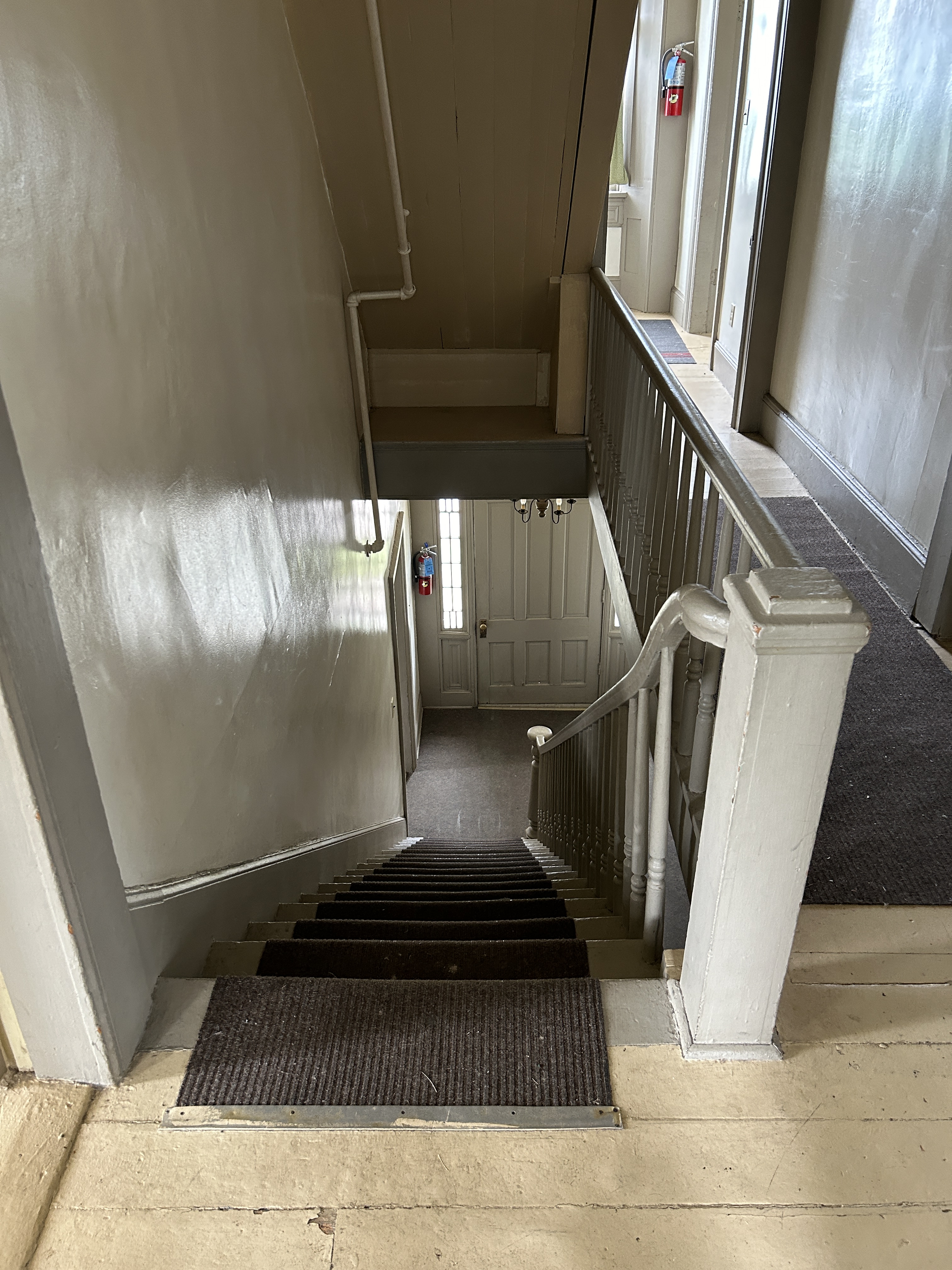
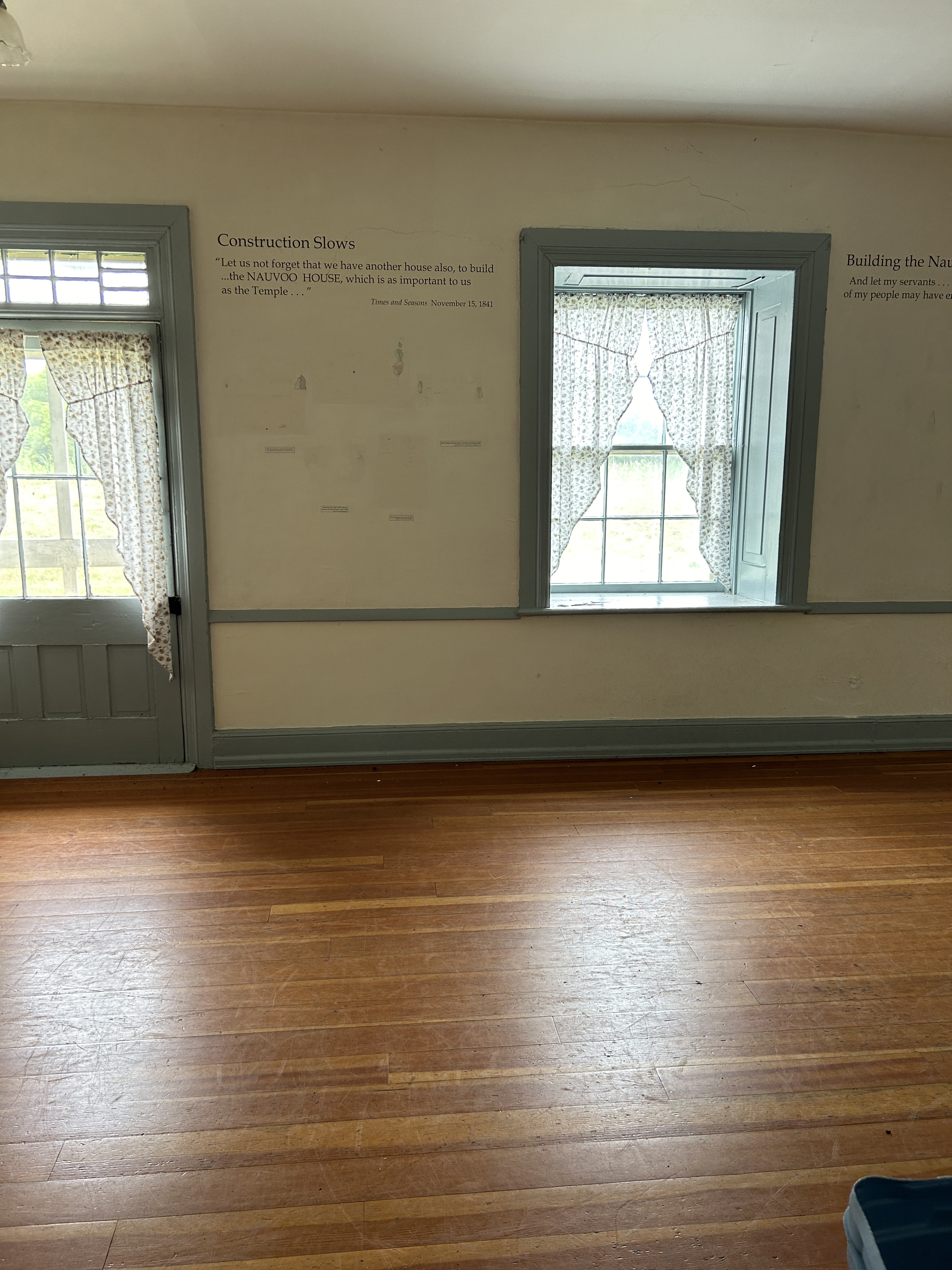
For over a century, the Nauvoo House was owned and managed by the RLDS Church (later Community of Christ). The Nauvoo House was a part of their Joseph Smith Historic Site walking tour. The church used the facility as a hostel for youth and family gatherings. A large commercial kitchen was created in the basement of the structure and dining was in the large room on the first floor.
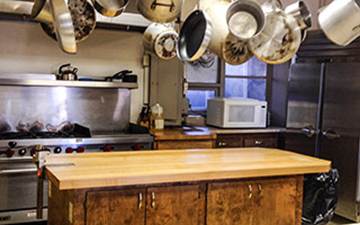
Above: Commercial Kitchen
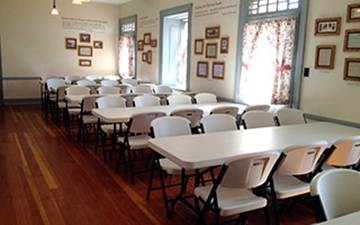
Above: Dining area within the RLDS/CofC Nauvoo House.
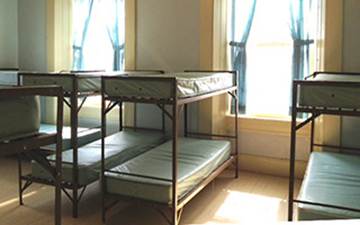
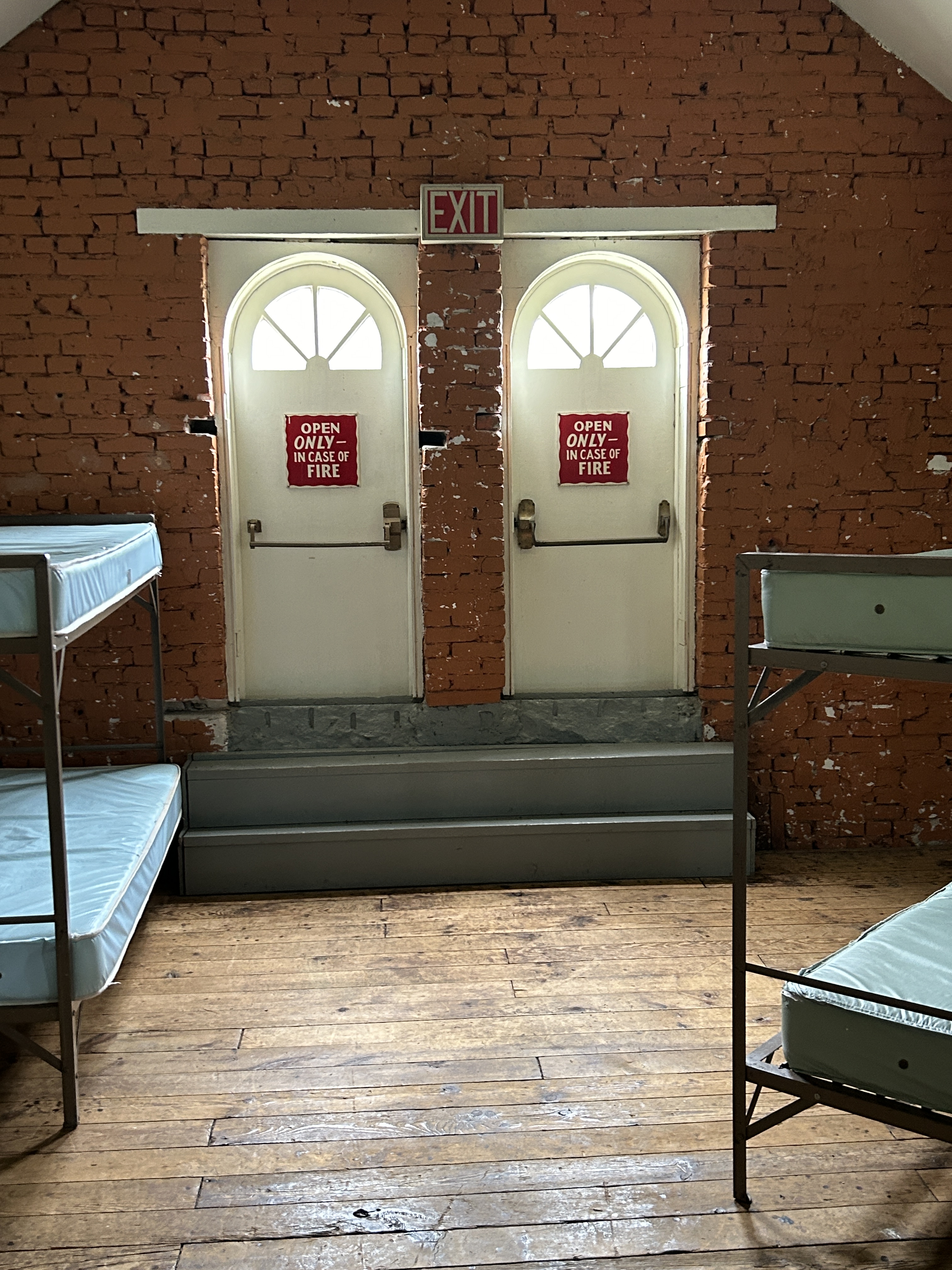
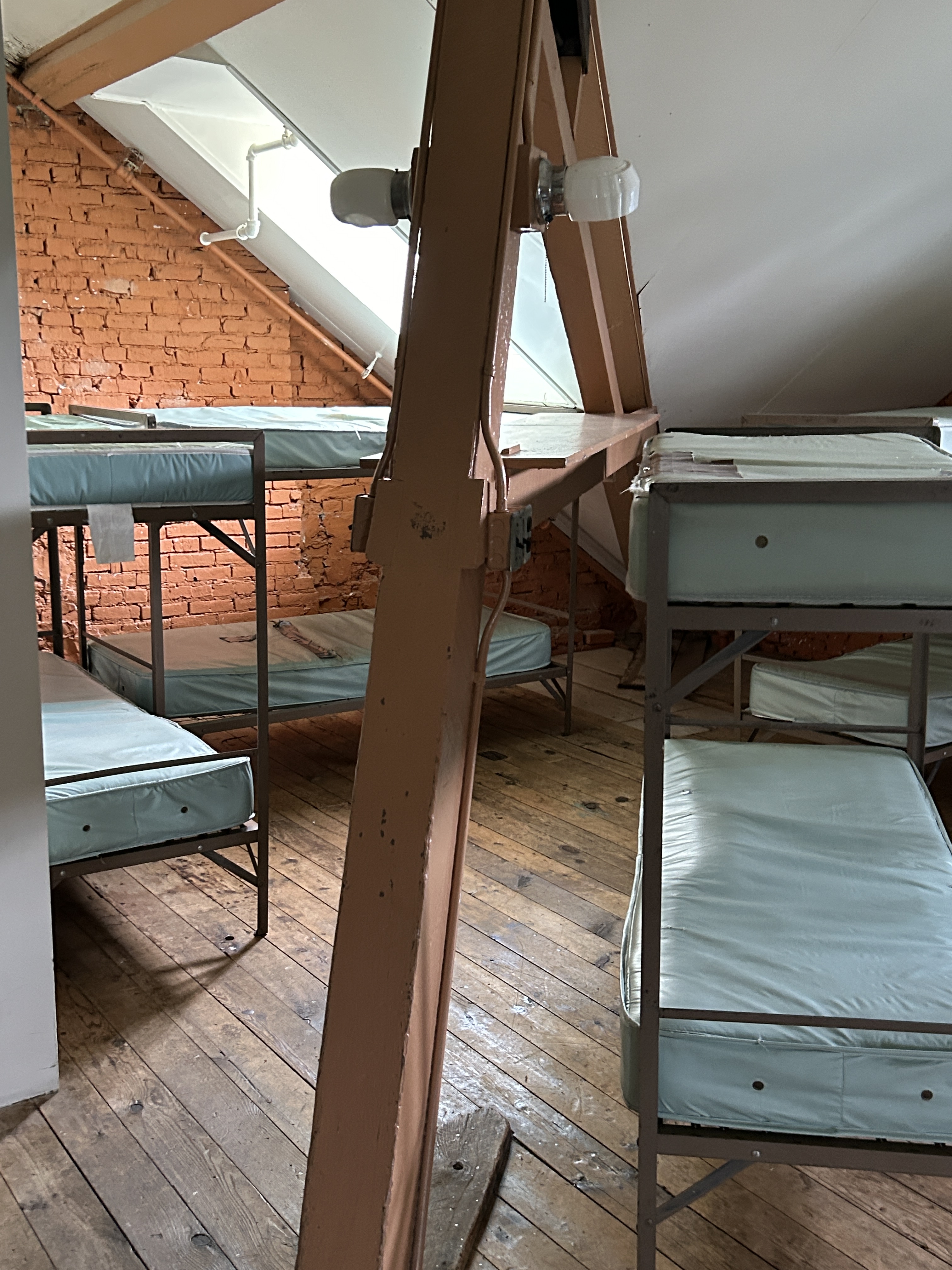
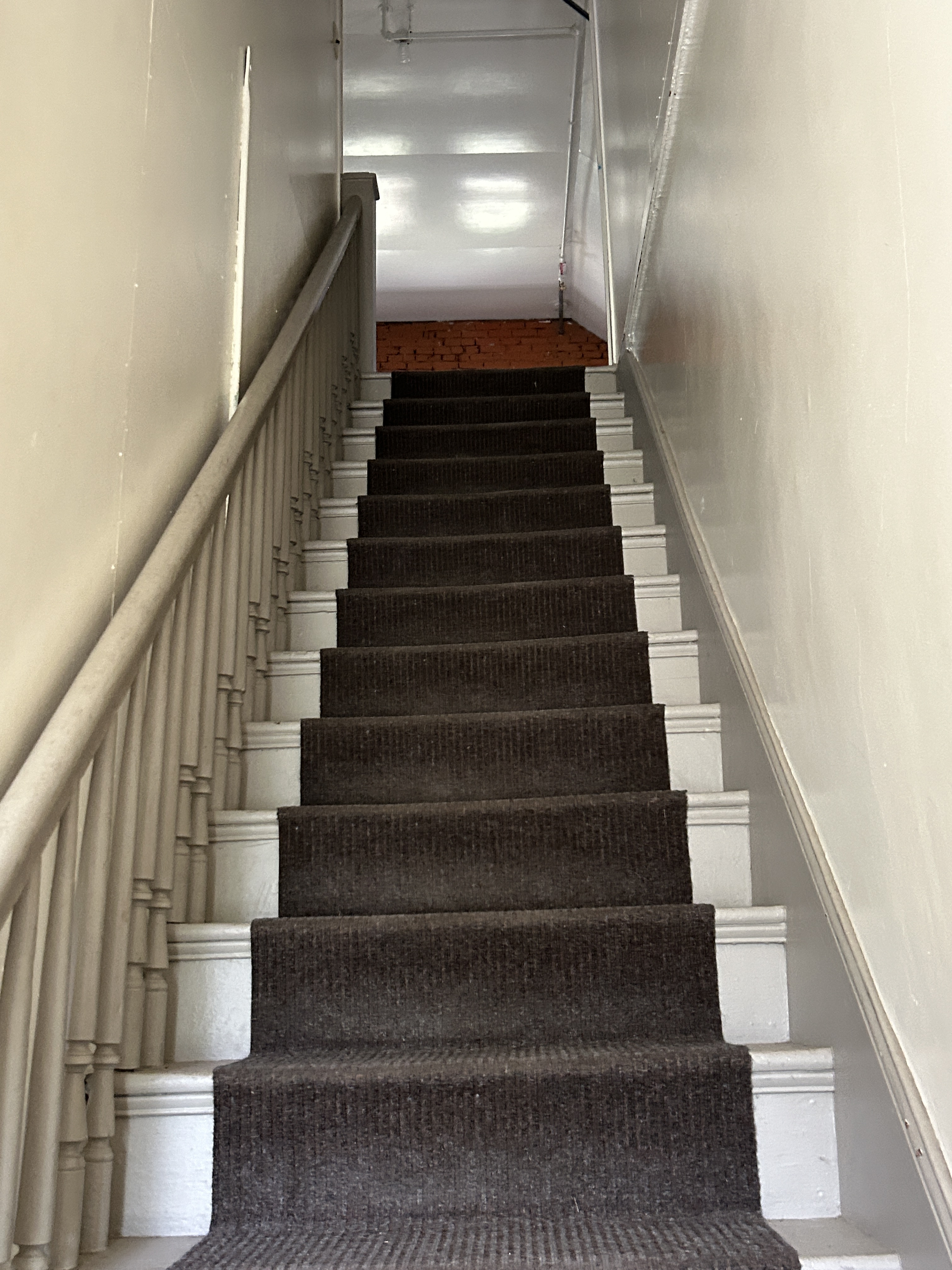
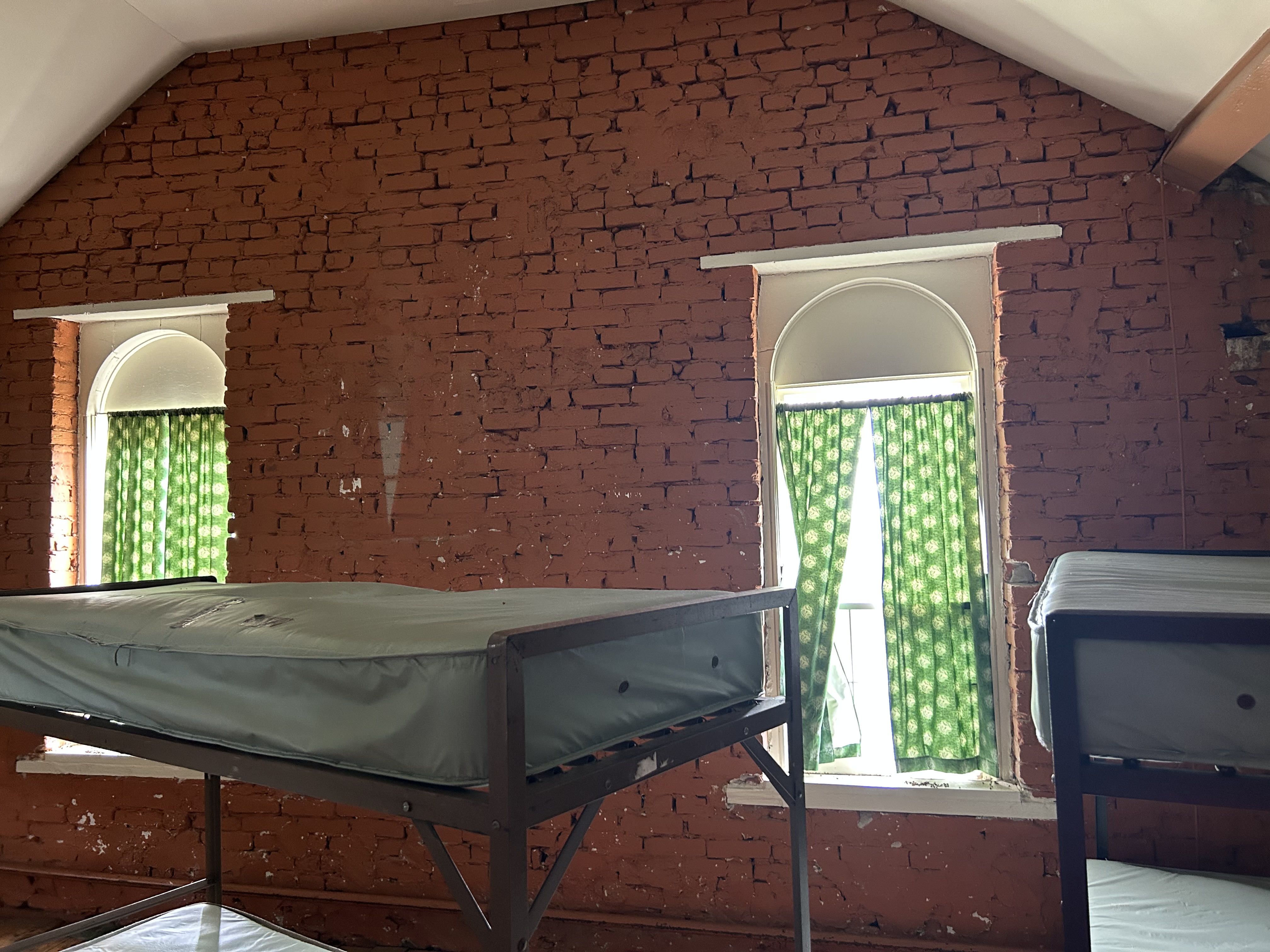
Per the Community of Christ website, groups from 20 to 60 could be accommodated in twin bunk beds located on the second and third floors. Bathrooms were located on each floor. Overnight guests were responsible for providing their own sheets, blankets, pillows, and towels.
Also per the Community of Christ website, the minimum nightly rate was $360 for up to 20 people. For each guest beyond 20 there was an additional fee of $18 per person per night.
THE BIDAMON STRUCTURE:
Lewis and Emma (or just Lewis after the death of Emma) razed part of the uncompleted Nauvoo House and constructed the small building just north of and adjacent to the Nauvoo House. This was a limestone structure.
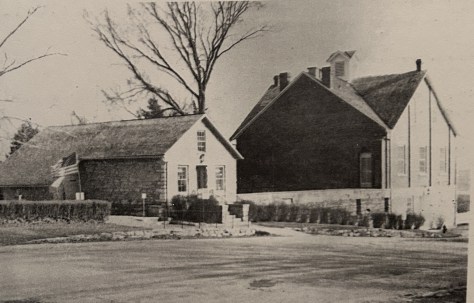
Above: Vintage photo with Bidamon structure on left and Nauvoo House on right. Note the orginal foundation or cellar wall which extgends between them.
In the mid-1970’s, the RLDS Church began using the small Bidamon structure as a visitor’s center as a part of their Joseph Smith Historic Site tour of the Joseph Smith properties. Within the structure folding chairs were set as a small theater to tell their story with a slide presentation.
The center (before the construction of the much larger brick visitors’ center) was the start of paid tours through the Joseph Smith Homestead and Mansion House. The tours were staged by young college interns, volunteers, and others.
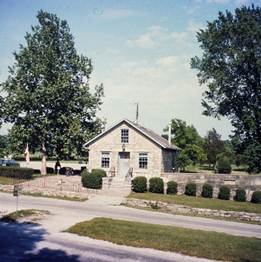
Above: The Bidamon structure as it appeared in 1975. Photo by then Elder Kevin V. Hunt
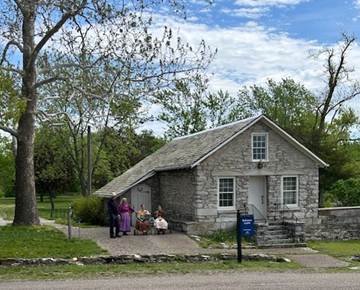
Above: The Bidamon structure as it appeared in 2025.
It is interesting to note that the structure of 1975 differs from the 2025 version. Note that there has been added the entry and extended roof on the left side of the structure … and under this roof are “new” stairs which go down to a basement that was also not a part of the original structure.
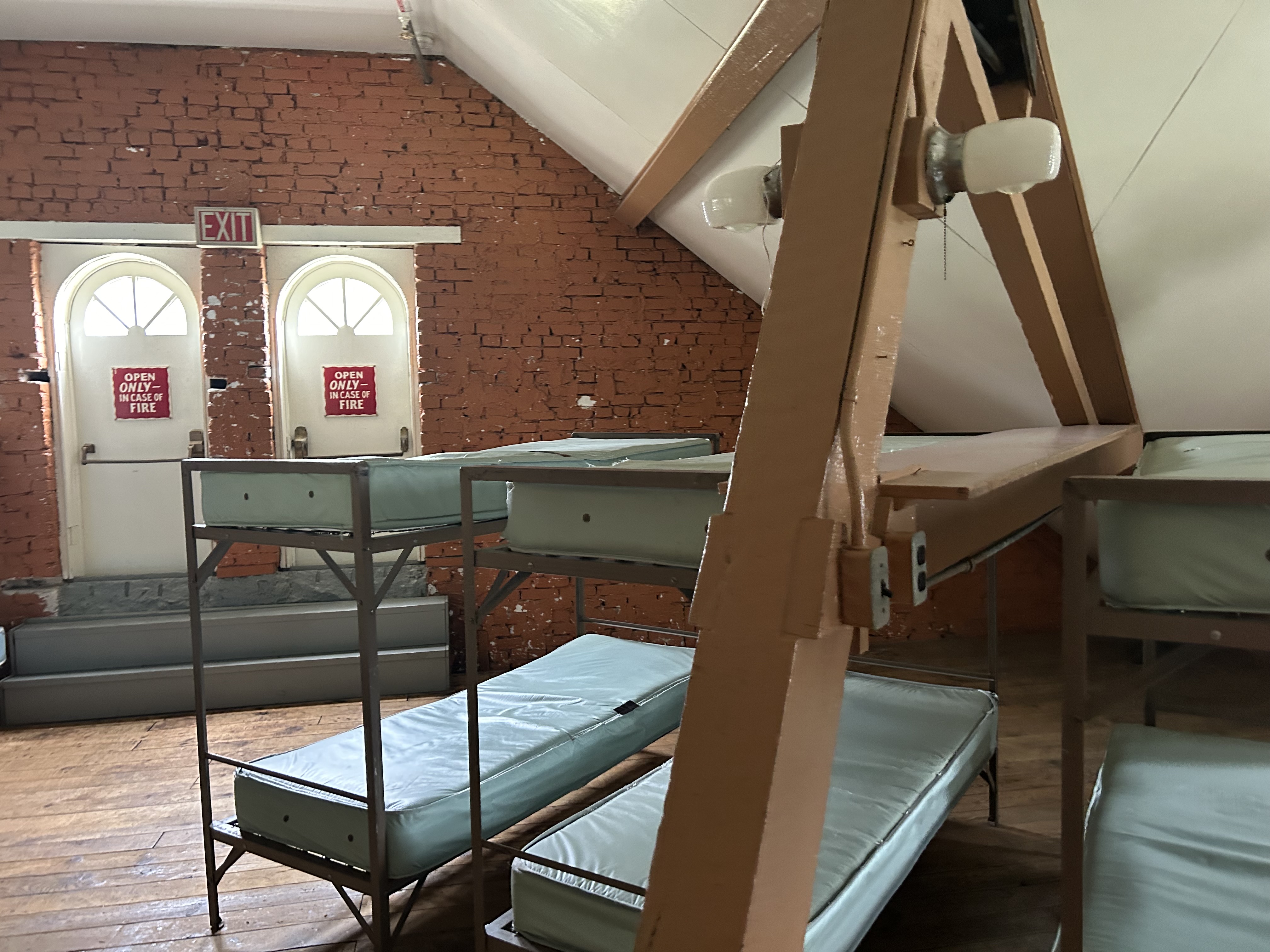
Today the Bidamon Structure has been remodeled to house young missionaries of The Church of Jesus Christ of Latter-day Saints. The main floor is used as a staging area for missionaries as they await the arrival of guests wanting tours of the Smith properties.
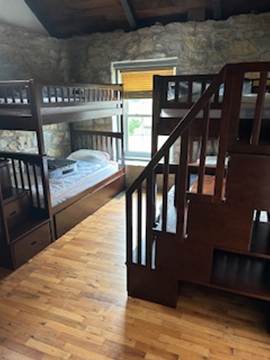
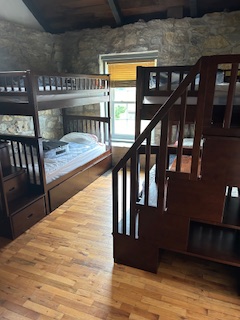
Above: Bunk beds in the current Bidamon Structure. Photo taken in 2025 by Kevin V. Hunt.
THE NAUVOO HOUSE WAS PURCHASED BY THE CHURCH OF JESUS CHRIST OF LATTER-DAY SAINTS:
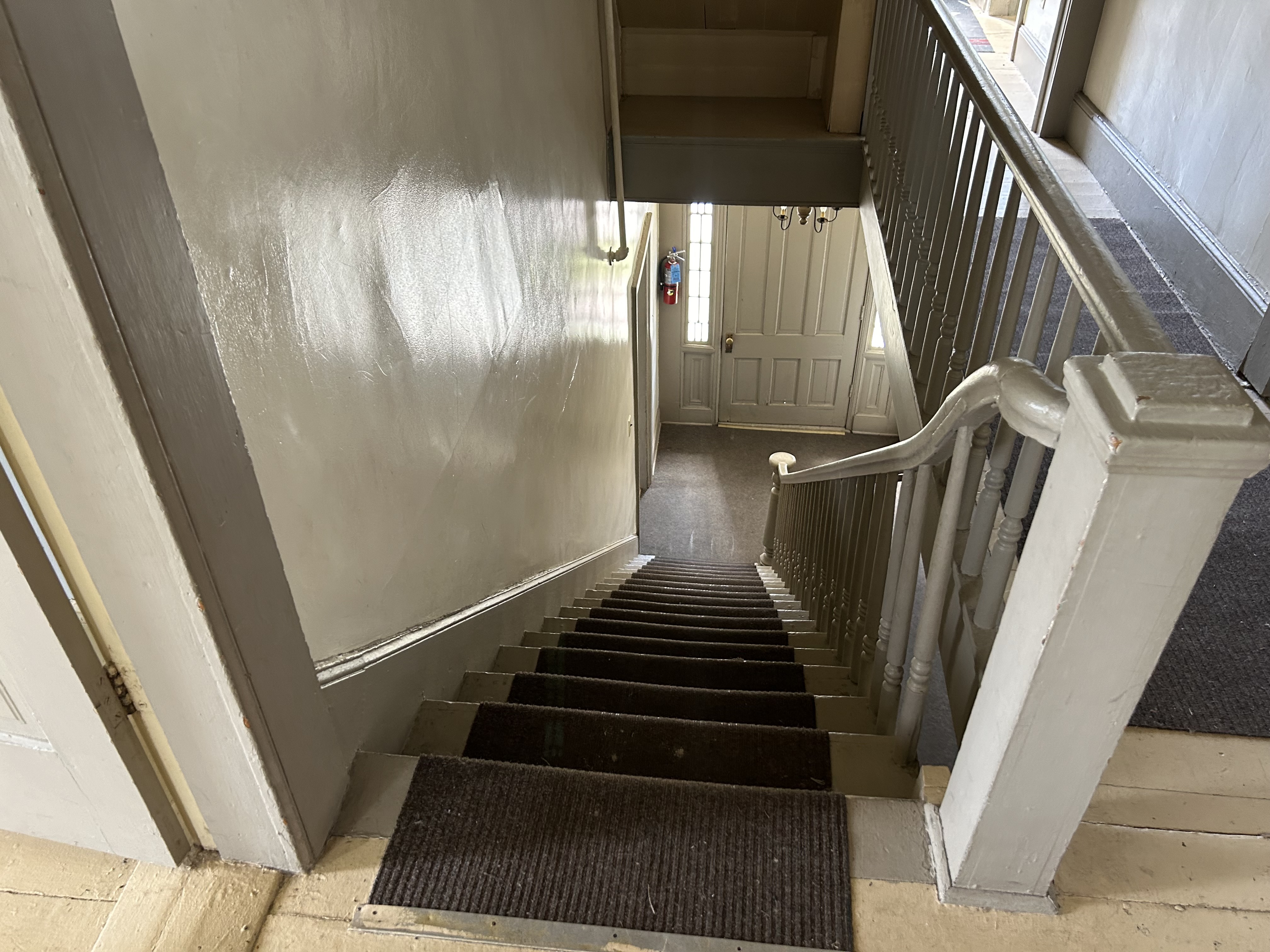
On March 5, 2024, the Nauvoo House and the Bidamon structure (stable), the Joseph Smith Homestead and Mansion House were sold by the Community of Christ to The Church of Jesus Christ of Latter-day Saints. The structure is no longer used as a boarding house and is not open for tours.
Today the structure is in a “holding pattern” while the Church determines its future fate, restoration, and public access (if any). The history of the Nauvoo House will evolve over time as new changes are approved and implemented by the Church History Department.
MODERN PRESERVATION OF THE BOOK OF MORMON MANUSCRIPT::
The historical significance of the original manuscript is documented in Book 5 of the Joseph Smith Papers (Project). See:
Robin Scott Jensen, one of the editors of the book said, “With the original manuscript of the Book of Mormon, we have the artifact that lay on the table and was being written upon by Oliver Cowdery or John Whitmer [or others, as Joseph dictated the text].”
In the Joseph Smith Papers, is the first complete photographic record of what remains of the original manuscript.
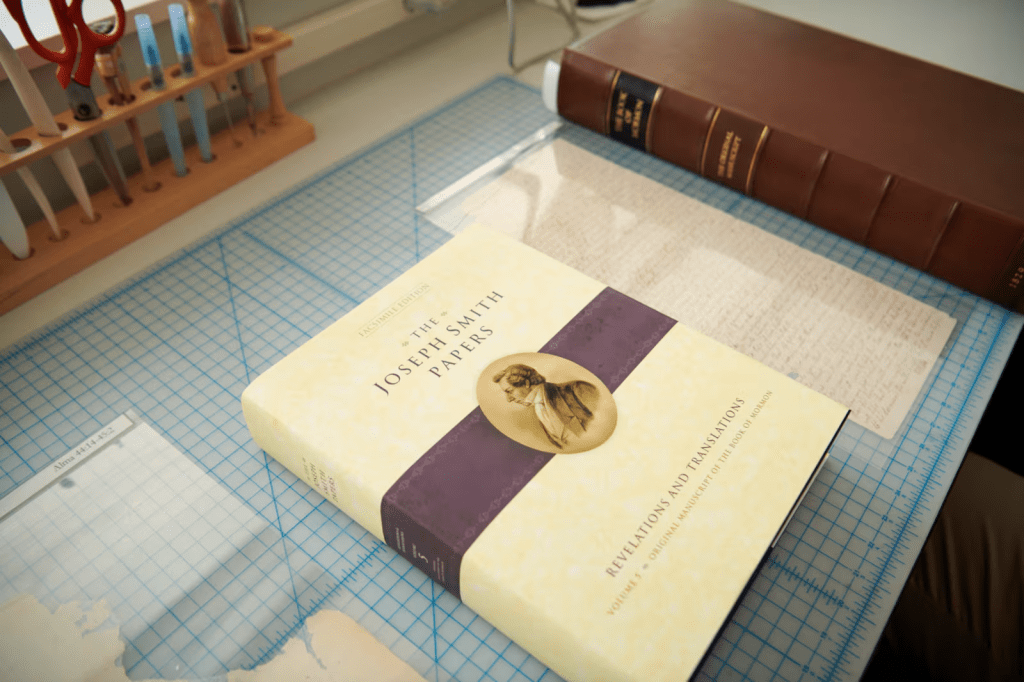
Above: Volume 5 of the Joseph Smith Papers Project – Photo Church of Jesus Christ of Latter-day Saints
“It is a deeply moving experience to look at these [manuscript] pages and see God’s hand moving His work forward.” —President Russell M. Nelson
President Nelson said in 2022 that “The original manuscript of the Book of Mormon is one of the most significant and sacred artifacts that the Church possesses.”
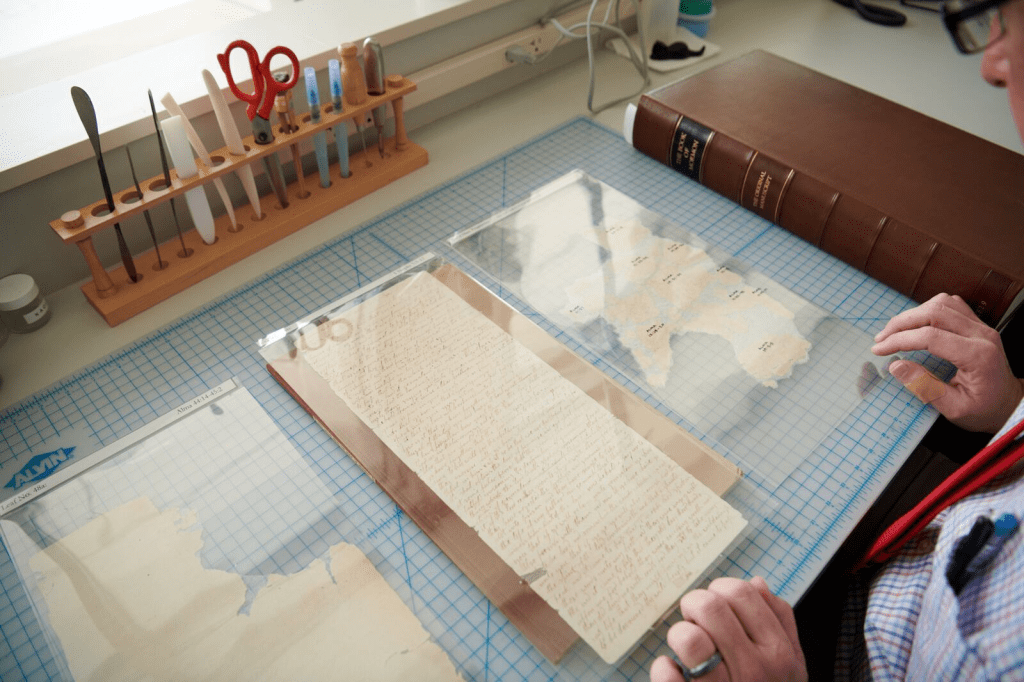
Above: Preserved images of the Book of Mormon fraqgments (Photo by The Church of Jesus Christ of Latter-day Saints)
“Church historians have taken great care — over more than a century — to gather even the most miniscule fragments of manuscript and preserved them from further damage,” he explained.
HISTORIC PHOTO:
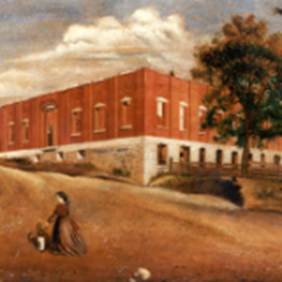
Above: Painting of the “Nauvoo House” painted on canvas about 1865 by David Hyrum Smith, the youngest son of Joseph and Emma Smith
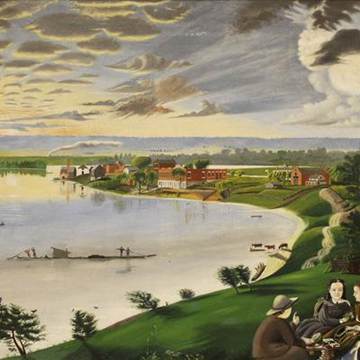
Above: David Hyrum Smith painting of the Nauvoo bend of the river – with the Nauvoo House located in the center of the painting.
CURRENT PHOTO(S):
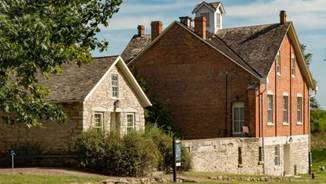
LOCATION ON THE BANK OF THE MISSISSIPPI RIVER:
The Nauvoo House is located on the south end of Main Street at the Mississippi River. When the Saints arrived in Nauvoo, many of them came up-river and disembarked at the wharf that was located adjacent to the Nauvoo House. Thus it would be been the logical place for a structure such as the Nauvoo House for the greeting, welcoming, and housing of the immigrants who came from around the world.
The Nauvoo House was directly west of the Joseph Smith Homestead and just south of the Smith Mansion House. Joseph would frequently go out to the dock to welcome incoming immigrants.
NAUVOO HOUSE IN THE MISSISSIPPI RIVER PLAIN:
The Nauvoo House structure stands within a few feet of the mighty Mississippi River. And because of that location, it has been threatened by major flooding of the river. Major floods occurred in 1927, 1993, and 2008, and likely in other high-flood years.
In July 1993 and also in June of 2008, much sandbagging was required to protect the structure. Pumps were used during these floods to extract water and to protect the building.
RESTORATION STATUS: Never fully completed. Created under revised plan. Not currently open to the public.
TYPE OF TOUR: No inside tours currently available. Visitors may observe, walk around and photograph the exterior.
The Nauvoo House does indeed have a significant and interesting history – from the Lord’s vision for the building – as stated in the Doctrine and Covenants Section 124, to it being a burial ground for Joseph and Hyrum Smith, the Book of Mormon.manuscript hidden in the cornerstone to its many functions in modern times.
 On the Nauvoo Trail