
Blog #51

By Kevin V. Hunt
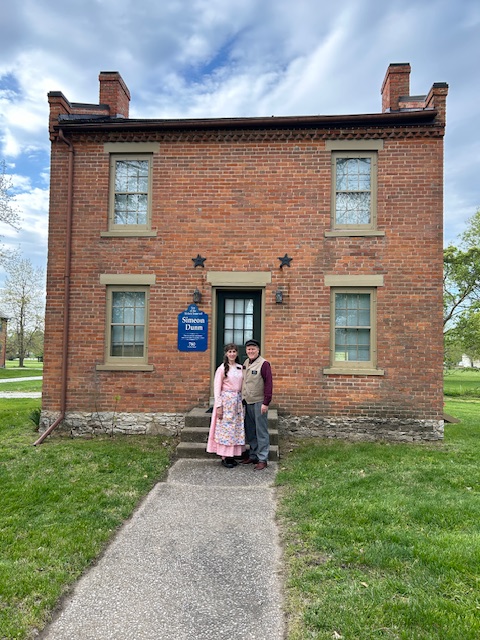
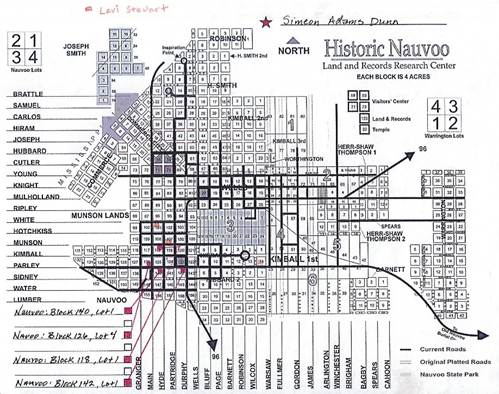
A few days before Sister Hunt and I arrived in Nauvoo to serve as missionaries, we received notice that we would be assigned to live in the historic Nauvoo home of Simeon A. Dunn, located at 780 Parley Street (at the SW corner of Hyde and Parley Streets). I knew already of the home. I had taken a photo of it in 1975 when I was serving my “young mission” in Nauvoo. I referenced this old photo and also did a Google Search of the home.
In my research, I learned that the Dunn home was built in the summer of 1841. Simeon Dunn bought the property from the Prophet Joseph Smith – and the deed was signed by Joseph and his wife, Emma Smith.
Simeon’s daughter Mary reminisced: On one occasion my father, Simeon A. Dunn was sick and the Prophet came to our house to administer to him. He commenced to joke to him about our house. He said, ‘I didn’t know as I would have had faith to administer to you if you hadn’t built your house two stories high. It can be seen from all over town.”
The Dunn home was the first 2-story home built in Nauvoo. AsJoseph Smith came to visit Simeon in his new home, he climbed upstairs, and congratulated Simeon on the new place and the view available from the upstairs.
THE VIEW FROM THE DUNN HOME
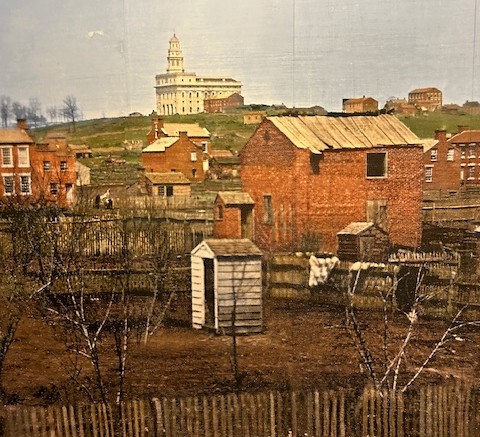
This same view – as seen by the Prophet Joseph, would in 1846 be the location of a now-famous photo looking northeast from the home and included the view of the Nauvoo Temple. This photo also captured the brick “carriage house” and latrine of Lucy Mack Smith. The rare photo is a classic and it has been fun to share it with many guests who come to Nauvoo.
(Insert 1846 colorized photo)
ELDER AND SISTER HUNT IN THE SIMEON DUNN HOME
From the time that we were assigned to live in the Dunn home, I have been intrigued with it. It has survived the test of time in that the outdoor brick structure has been preserved since the time of Simeon Dunn. Wow! This alone is a miracle. The home was restored (with some minor restoration work on the exterior). The home interior has been changed and modified to now be a comfortable residence for senior missionaries. It was and has been our great privilege and blessing to be able to occupy the Simeon A. Dunn home. We rejoice in it.

And since we have been residents through our mission in the Dunn home, I felt that I should honor him and thank Simeon for his beautiful home made available to us. And to honor him, I have researched and written this blog about him.
Above: Sister Lou and Elder Kevin Hunt as missionaries living in the Simeon A. Dunn home
THE BIRTH OF AND FAMILY OF SIMEON A DUNN
Simeon was born August 7, 1803 in Groveland, Ontario, New York. Simeon received his name through family heritage. He was the fourth such Simeon in the family line. His mother was Sarah Bath. Father Simeon left the home and family when Simeon was very young. This left the young mother with the children, Mary, William, Simeon, and James.
Simeon’s mother died when he was just 3 years old. And then his father died as a soldier in the War of 1812. Simeon and his siblings were then raised by friends of the family. Simeon lived with a Skinner family for a number of years. He finally left the state of New York and settled in Michigan.
A MOVE TO MICHIGAN
On April 10, 1827 (a year before his marriage), Simeon obtained a land patent in Detroit, Michigan. He obtained 73 acres. He purchased the property from his future father-in-law, Amariah Rawson. Amariah Rawson had obtained the land from the Monroe Land Office, a patent for 240 acres in an area that straddled the Washtensaw and Wayne County lines as well as the Huron River. Amariah had built a saw mill and established a lumber business. The area later became known as Rawsonville. Simeon later married Amariah’s second daughter, Adaline.
Simeon served as the town Constable, and as a highway commissioner. He bought and sold land and was a farmer.
FAMILY OF SIMEON A DUNN
Simeon Dunn suffered much of sorrow throughout his life as he experienced the deaths of many of his wives and infant children.
On August 7, 1878, Simeon recorded, “I have had born to me 19 children, 40 grandchildren, 16 great grandchildren, and they are all within the pales of the Church …”
Simeon first married Adaline Rawson. They were married 11 July 1828 at a Washtentaw County, Michigan by a justice of the peace.
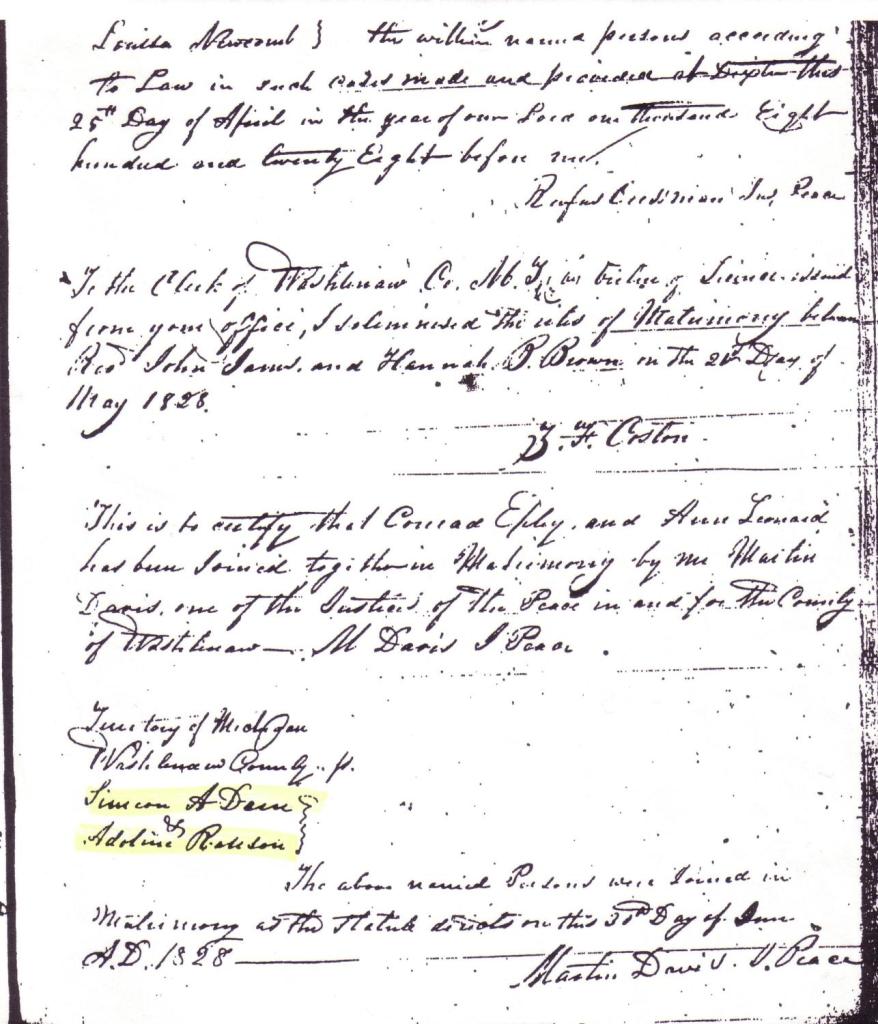
Above: Marriage Record of Simeon A. Dunn and Adaline Rawson.
Adaline was from “Rawsonville” in Van Buren County, Michigan. She was born 27 November 1811 in Van Buren Township, Wayne County, the daughter of Amariah Rawson and Elizabeth Carpenter. When they married, Simeon was age 24 and Adaline was only 16.
I have a Rawson line on my mother’s side. Mother’s grandmother was Sarah Emily Rawson. Using my Ancestral Quest family history database, I learned that Simeon is the spouse of Adaline who is my 2nd cousin 5 times removed. That probably means that Adaline and my 3rd Great Grandfather, Horace Strong Rawson would have been the 2nd cousins. And their fathers, Amariah and Daniel would have been 1st cousins. Their grandfathers, Abner and Silas would have been brothers – and sons of the common ancestor Nathaniel Rawson. Wow! Who would have guessed! I guess I had better sign the Dunn family book. I’m all in for it. (More on that later!) I did later sign the book and it was great to actually acknowledge that I am, indeed, also a Dunn family member.
Simeon and Adaline were blessed with seven children:
Adaline was born 19 June 1830 in Belleville, Van Buren County, Michigan. She later married and headed westward with her husband, Peter Haws. She died a young bride in Iowa on 11 January 1852.
Son Francis was born 5 December 1832 in Van Buren County. He died 22 February 1835.
Daughter Mary was born 1 November 1833 in Van Buren County. (She lived until 1920)
Daughter Maria was born 3 March 1836 in Van Buren County. She died less than a month later on 1 April 1836.
Simeon and Adaline welcomed twins, Mosiah and Amariah on 19 February 1837 in Belleville, Van Buren County. Both boys died the same year.
Daughter Betsy was born 22 March 1838 in Van Buren County. (She died in 1922,) Betsy grew to adulthood and went west and raised a family there.
Simeon’s wife, Adaline, died 22 October 1841 in Nauvoo in the Dunn family home. She died as Simeon was off on a mission to West Canada.
BAPTISM AND THE MOVE TO NAUVOO
Almira Mack, a niece of Lucy Mack Smith, from Pontiac, Michigan, visited Palmyra in 1830 and was baptized. Afterwards several trips to Michigan were made by Hyrum Smith, Lucy Mack Smith, and others to preach the gospel the other relatives and their friends and neighbors. Simeon’s brother, James must have heard the gospel and joined the Mormon church about this time.
James Dunn, a brother to Simeon, came to see his brother as a missionary in 1838 in Michigan. Simeon was baptized 25 April 1839 by James Dunn.
Simeon said in his own words, “I was baptized into The Church of Jesus Christ of Latter-day Saints on the third Monday [that would be the 15th] in April 1839 by Elder James Dunn, in the town of Van Buren, Wayne County, Michiga (in the Huron River). I was the first man that was ever baptized in that river by Authority from Heaven, and he, James Dunn, the first Elder that I ever saw. My wife, Adaline Rawson, was baptized a week after I was, she being the second person baptized in that river.”
Some historians state that Simeon was given a Book of Mormon by his siter, Mary. Some of the missionaries preaching in this area of Michigan at the time of Simeon’s baptism were Stephen Post and Mephibosthreth A. Sirrine. Stephen Post’s journal gives some interesting insight into Simeon’s first few months as a member of the “Mormon Church. Stephen Post recorded:
31 May 1839. “We stand with brothers Martin and Sirrine at 2 o’clock we met in conference. Elder James Dunn represented Van Buren, Wayne County. 6 members in good standing.
Monday 3rd June 1839 went home with Simeon Adams Dunn to Van Buren, Wayne, county, traveling about 27 miles.
“Tues. 4th: Tarried at Brother Dunn’s. Took a walk to the outskirts. This even I preached at the house of Amariah Rawson in Rawsonville. P.M. Elder Dunn bore testimony. … The people paid good attention.
“Wed. 5th … This P.M. I preached at Br. Simeon A. Dunn’s on the literal gathering of Israel. Had good attention.
“Fri. 24 (June 1839) I came to br Simeon Dunns in town of Van Buren 13 miles.
“Sat 29: This P.M. I preached here at br. Dunns.
“Sun. July 21st 1839: I preached to an attentive congregation A.M. at Rawsonville. 2 PM at the school house near Dunn’s. At 6 o’clock assembled at Br. Wm Dunns. I addressed the brethren and sisters in short gospel to ordinances of the blessing of small children & the duties of a priest. After prayer Simeon A. Dunn weas ordained to the office of a priest by me.
“Mon. 12th (August 1839) … came to br. S.A. Dunns Vanburen 19 mm. I found br Dunn sick & at William Dunns his 6 children are sick & hired man. I also learn that a great many are sick in this vicinity. The diseases are agues and fever.
“Tues 13th: This A.M. tarried at br Dunns.
“Wed and Thurs: I worked at haying for br. S. A. Dunn. Also Fri. A.M.”
“Sat. 17th [1839]: Br. Dunn gave me $1.97 for my labour.
“Mon. Aug 19th: This P.M. I left br S.A. Dunn and Wm Dunns families who have treated me with much kindness.”
SIMEON DUNN MEETS THE PROPHET JOSEPH SMITH
Simeon was eager to meet the Prophet Joseph Smith he soon set out on foot for Nauvoo, a distance of 500 miles to see the Prophet of the Lord. So on June 20, 1840 he happily exclaimed: “For the first time in my life, mine eyes beheld and acknowledged the Prophet of God.”
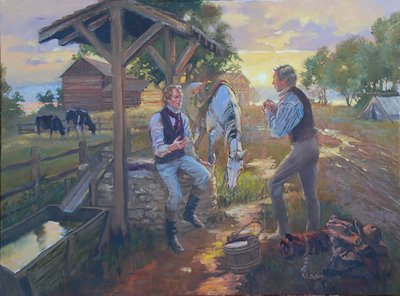
painting by Glen S. Hopkinson
Painting by Glen Hopkinson, commissioned by a descendant of Simeon Dunn. After Simeon had walked about 500 miles from Michigan to Nauvoo Illinois, he met the Prophet Joseph Smith.
The Prophet’s father gave Simeon a patriarchal blessing. Simeon recalled, “I visited the first Patriarch of the Church of Jesus Christ of Latter-day Saints, and he Joseph Smith, Senior, blessed me with a Father’s blessing, and explained to me the history of Abraham, from the Scripture.” Simeon remained in Nauvoo for only a short time and then returned home to Michigan, still walking.
Simeon says, “I started and returned to my home in Michigan , bearing my testimony of the everlasting Gospel, going and coming with much rejoicing.”
Upon Simeon’s return, the family made plans to move to Nauvoo to join the Saints. In June 1841, Simeon and Adaline were able to sell their 140 acre farm for $2,000. They said their goodbyes to Adaline’s parents and siblings as well as Simeon ‘s sister, Mary, and left for Nauvoo leaving June 20th.

Above: Simeon Dunn as a young man
Simeon took his family – which consisted of hie wife Adaline and three children, Adaline, Mary, and Betsy, back to Nauvoo, arriving in Nauvoo August 5, 1840. Daughter, Mary, states, “We had just arrived in Nauvoo when we met the Prophet Joseph Smith,. We met him just below the Temple hill. He stopped and shook hands with all the family, even the baby, and had words of comfort and encouragement for us all. I thought what a good man he must be to notice us little children.”
Simeon served as a body guard to the Prophet Joseph Smith and was a night guard on the Nauvoo Temple.
Mary Dunn stated that her family saw the Prophet Joseph Smith often as they were neighbors, and the children often played together.
In September 1841, Mary’s father, Simeon, left on a mission to West Canada.. Shortly thereafter, in October, her mother died. Many women would fill the role of “mother” throughout Mary’s life, including her older sister, Adeline.
ASSOCIATION WITH THE PROPHET JOSEPH SMITH
Returning from his mission and again living in Nauvoo, Simeon continued to demonstrate his loyalty to the Prophet Joseph Smith and his new-found faith. He served as member of “the old nauvoo Police”. He was chosen by the Prophet Joseph, as one of the forty-three policemen, to guard the City and the Temple of the Lord. He joined the Masonic Order. Sometimes he left letters unclaimed at the Post Office. He paid taxes. And on June 19, 1842, Simeon married his second wife, Margaret Snyder. They had two children, Susannah born 6 May 1843 (died 1921) and son Simeon, born 3 February 1846. He died less than 3 weeks later on 21 February.
The prophet was often called upon to heal the sick. The Dunn family could bear testimony to his power of healing. Once when Simeon was very sick, Joseph laid his hands on Simeon’s head and asked if Simeon had ever had the measles. Simeon answered, “No.” “You will have them,” replied the prophet, and before he removed his hands from Simeon’s head, he was broken out with thick spots. On the 6th day of May, 1843, a daughter, Susannah, was born to Simeon Adams Dunn and Margaret Sneider. A short time later, the child became sick with what was called “black canker.” Margaret took the baby to the prophet, who then went with the family to a stream of water. Joseph took the baby, laid it across his hand, face down, and immersed it in the water. The baby recovered.
Simeon and his family often saw the prophet riding on his favorite horse, Joe Duncan, at the head of the Nauvoo Legion or on parade the 4th of July. They also watched him participate in various sporting events and ball games on the green. Due to the various political conflicts at the time, the city of Nauvoo decided to put up its own candidate and avoid taking sides with one political faction or another. Joseph Smith was chosen as the logical candidate, and he declared that in order to make his claim known, men were to be sent out to electioneer and make stump speeches. For this purpose, Simeon Adams Dunn returned to the state of New York where he had formerly lived. There he had old friends who might help him in spreading the news about Joseph’s candidacy.
On June 27, 1844, Joseph Smith and his brother Hyrum, were shot and killed while awaiting trial in Carthage Jail. Simeon returned from New York in time to be present for the meeting on August 8, 1844, when the mantle of the prophet fell on Brigham Young. As Brigham Young arose to speak, the congregation saw the Prophet Joseph instead of Brigham Young and they heard his voice as if he, himself, stood before them in life. It was unanimously accepted to sustain the Council of the Twelve Apostles as the leaders of the church. Simeon remarked upon leaving the meeting, “They need not hunt any further, Brigham Young is the man to lead us.”
THE MARTRYDOM OF JOSEPH AND HYRUM SMITH
In her autobiography, Mary told about hearing the Prophet Joseph Smith’s farewell speech from her house and watching him pass by the house on horseback the following day. Her father was once again gone on a mission (to New York) She remembers walking down to Bro. Chase’s house (a missionary companion of her father’s) with her mother (Margaret Snyder) to see if there was ny news from them when the sad news of the Prophet’s death came into town. She described these events following the Prophet’s death:
“I remember when the bodies of Joseph and Hyrum were brought home and placed in the Mansion House. Thousands went to view the remains. I did not go to see them. I felt as though I could not endure it. It seemed more than I could stand to see those good souls cold in death. When they were taken to the cemetery they passed our house [on Parley or Hyde Street]. It was a sad sight.”
At the time of the Prophet’s death, Simeon was on a mission to Michigan, advocating the Prophet’s claim to the presidency of the United States.
About eight months later, Simeon remarried, and the Dunn daughters had a new step-mother to help take care of the family. Her name was Margaret Snyder. Perhaps life began to feel “normal” again for the family. Mary noted that she was able to attend Common School from November 21 to December 29 of that year and she was also baptized (1842).
PERSECUTION AND TEMPLE ORDINANCES
After the death of Joseph Smith, persecution in Nauvoo continued to escalate. The Saints hurried to complete the Nauvoo temple before evacuating Nauvoo. Although very you (age 12) Mary received her washing and anointing in the Nauvoo Temple on January 31, 1846. The saints worried about how long it might be before they would have access to another Temple to complete these ordinances. Later that day, Mary was sealed to another very young man, Mosiah Lyman Hancock (age 11) with the “understanding that they were not to loive together as man and wife until they were 16 years of age.”
The work on the temple continued almost unabated despite the mob activity which increased after the acquittal of the murderers of the prophet and his brother. The charter of the City of Nauvoo was repealed and the saints were warned to leave the state or be the cause of much bloodshed. Brigham Young agreed to move the saints out, but requested time to prepare, sell their homes, etc., and not be molested in the process. General conference was held in the temple in October, 1845, and in December, the ordinance work was commenced by the general membership. Simeon was endowed and sealed to his wife on December 27, 1845.
On January 22, 1846, Simeon stated, “I was called and had sealed to me, Adeline Rawson and Margaret Sneider. Adaline having died on the 22nd day of October 1841. On February 6, 1846, I was called with my wife, Margaret, and received our second anointings, and sealed on us all the blessings thereof, under the hands of Zebedee Coltran.”
Although the Saints were only able to use the completed Nauvoo Temple for a few months, daughter Adaline was able to receive her endowment a few days after her father and step-mother on Christmas Eve, December 24, 1845. She was only sixteen years old at the time. She had recently married Alpheus Peter Haws and they were sealed by President Brigham Young just over a month later on January 30, 1846.
DEPARTURE FROM NAUVOO
This meant that Simeon was a widow (twice) and was to leave Nauvoo with four daughters. Simeon recorded, “On February 9, 1846 the Twelve Apostles left Nauvoo and crossed the Mississippi River for the wilderness. On May 18th, I left Nauvoo to follow in their wake, and shared in all the toils of the westward trek.” On his way out of town, Simeon married Jane Caldwell in May 1846 in Nauvoo.
The winter was harsh and cold, and on Wednesday, Feb. 4, 1846, in the midst of a cold winter, the first of the saints left Nauvoo fearing for their lives at the hands of their neighbors. Simeon was not among those leaving, for Margaret was due to deliver their second child. On Feb. 9, 1846, a son, Simeon, was born to them. On this same date, a detachment of the governor’s troops came into the city and caused a great deal of fuss. At three thirty that afternoon, the roof of the temple caught fire, but it was soon extinguished. A flatboat crossing the river overturned and sank. The governor’s troops attempted to enter the temple, but were successfully stopped.
THE PIONEER TREK WEST
Less than two weeks later, the Saints would begin leaving Nauvoo. Histories indicate that Adaline and Alpheus P. Haws left with the initial body of the Saints and traveled across Iowa with Alpheus’ father, Peter Haws, who was appointed a “captain of 50” during this trek.
Simeon Dunn was delayed in leaving Nauvoo as his wife was ill after having just delivered a child. As the Saints prepared to leave, Margaret Snyder Dunn was about to deliver her second child. Simeon’s, son, Simeon, was born February 9, 1846 but lived only 12 days and died on February 21st. . Margaret never fully recovered from the trauma of the events and died in Nauvoo. Simeon’s Margaret died in the Dunn home on the 5th of May, also in 1846. The baby son and Margaret were buried at the Pioneer Cemetery outside of the city. All were buried in the Nauvoo Pioneer Cemetery.
Because of Margaret’s health, Simeon had been delayed in leaving. It is impossible to know how Simeon felt about leaving Nauvoo with Mary (age 12) Betsy (age 7), and Susannah (age 3). On May 1st, 1846, the temple was publicly dedicated in the presence of about 300 saints. Soon after, in May, Simeon and his four girls left Nauvoo to follow the saints westward.
The ice began building up on the Mississippi River during the latter part of February. Many of the saints crossing the river in rafts, were in great difficulty because of it. One such young woman, Harriet Atwood Silver, from Vermont, was on a ferry traveling across the icy water. One of the ropes broke and the boat went down. However, through hard work, they were all saved and she traveled on the Winter Quarters.
During this time period, Simeon married a widow, Jane Caldwell Waite with children. They pooled their belongings and became a family. . It was with great embarrassment that Jane proved to be still married to another man who came after her. Jane Caldwell Waite’s supposedly dead husband, Eli B. Kelsey, returned home from a mission and came looking for her and the marriage to Simeon was ended. She was excommunicated from the Church. Their short marriage produced a son, Joseph Moroni Waite born on February 12, 1847 at Council Bluffs, Iowa. Later in Joseph’s life he found his father and was welcomed with open arms.
As they were preparing to depart for Utah Territory, Mosiah Hancock recorded this incident in his journal:
“While we were camped at Winter Quarters, Mary Dunn came to our camp and wanted to go with us, but mother said we could not take her because we had no room. Mary’s mother had died and her father (Simeon) had gotten a stepmother for his children. She came with her bundle of clothes to our wagon, and with what joy I hailed my noble, beautiful wife: But Mary had to go, and oh what sorrow as I saw her depart. We were separated for life.”
Simeon helped with the layout of Winter Quarters and as in Nauvoo, was a guard and policeman.
Simeon’s daughter, Betsy, later shared memories of the trek westward. She said, “I remember so well the buffalo. There were great herds of them. I think I have seen more of them than I have of cattle and I have seen a great many of them. It seems like the land was just covered for miles with buffalo. We would have to stop until they got past as they were very vicious if molested. The noise was so loud it made us afraid.
“After we left Fort Bridger, we came across great drones of ground squirrel. We did not know what they were. They would stand up and all bark making much noise. They kept barking until we all got past them. We passed great herds of deer and lots of antelope. Tnhey did not seem very much afraid and would stand off and watch us.
Speaking of her step-mother, Harriet, Mary said, “She certainly helped us in the hardships we had to bear. Mother (Harriet) would take pieces of buffalo robe, and put the wooly side in and sew them and make us shoes. She was very handy with a needle. We girls would stand on the bank where the buffalo would come for water. Lots of this wool would catch on the willows and we would get it and dry it. Mother had a pair of cards and we got enough wool for mother to make us stockings to wear.”
After arriving in Utah, and getting settled, having food to eat was still very much on the mind of everyone. That winter was “short rations”. Every morning Harriet would cut their corn bread cake in five pieces, one for each them. How glad they were after their first crop of wheat came in, and they had all the white bread they wanted to eat. When Simeon left on his mission to the South Seas, Betsy became responsible for herding the cows. For her two years of work, Betsy was given a pretty calico dress – which she cherished.
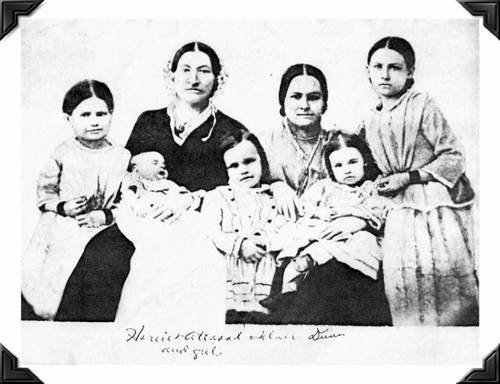
Harriet Atwood Silver Dunn with her and Simeon’s children. Mary sits to her left, Betsey rests on Mary’s arm, and Susannah is on Harriet’s right. The three younger children were born to Harriet. Mary and Betsy were born to Adeline and Susannah was born to Margaret.
SIMEON DUNN THE PIONEER
Simeon was an early pioneer. He went west in the 2nd Pioneer Company of Brigham Young. His family group consisted of himself, Mary Dunn, Simeon’s new wife, Harriet Atwood Silver Dunn (who was just age 14) and young daughters Betsy and Susannah. They departed Winter Quarters on 5 June 1848. Mary stated that she started without shoes and drove a yoke of oxen. No shoes and cactus was a particular problem.
Simeon and family had two wagons, one yoke of oxen, and one yoke of cows. The milk from the cows would be put in a can and hung on the back of the wagon. At night, there would be butter for supper. Daughter Mary drove one team and Simeon drove the other. When they came to a river that they could ford, Simeon would drive in and Mary would follow him. Sometimes he would have to unload one wagon and put all their possessions up on boards where they would not get wet.
One night when camped close to Fort Bridger, the family saw some Indians coming. One young Indian left the rest and handed Mary a lovely shawl. He told her to come with him and be his wife. Mary was a very pretty girl. Fearing for the family, the Dunns tried to give the shawl back. The Indian refused to take it, but thankfully, turned and rode away and never bothered them again. Mary wore the shawl out after getting to Utah.
ARRIVAL IN UTAH AND A NEW MISSION CALL
The family arrived in the Great Salt Lake Valley on 24 September 1848.
Sarah Sophia was born to Harriet and Simeon in Salt Lake City on July 8, 1848. The family worked hard and soon had a comfortable home. On Sept. 28, 1850, Simeon was called on a mission to the South Sea Islands.
On Sept. 28, 1850, Simeon was called on a mission to the South Sea Islands. His health had been very poor for almost a year, and the family had no means of support for themselves, let alone missionary expenses. However, Pres. Brigham Young promised him that if he would go, the Lord would bless him with health and that his family would not want or suffer during his absence. This was also promised in his patriarchal blessing. He soon left for Tahiti. He served an honorable mission and fulfilled the prophesies he had been given concerning this mission.
After his departure, a son, Simeon Adams, was born to Harriet and Simeon on January 13, 1851. Later, Harriet took a little orphan boy, Sam Payne, to raise. She had seven children to care for and support during the absence of her husband. She did this without calling on the church for help. From frozen rushes gathered by the river, she put bottoms in chairs and also made brooms out of split birch. These she sold to the settlers in the valley and made a meager living for her family.
Simeon returned home from a splendid mission in 1852. He found the rest of his family well and saw his son, Simeon Adams, for the first time. This was the first son of the family who survived.
Simeon’s daughter, Adaline and children died in Iowa as Simeon was on his mission. She died on January 11, 1852. Her husband, Alpheus Peter Haws (home from the Mormon Battalion) reconnected with Simeon and his family. Within a short time, Alpheus Peter Haws then married Simeon’s youngest daughter, Betsy. Betsy was only about fifteen years old when she married Alpheus Peter Haws.
THE CALL TO SETTLE IN BRIGHAM CITY, UTAH
In May of 1853, Simeon was called to go to Brigham City and start a settlement there. Besides Simeon’s family there were only about eight other families. They all lived in the old fort and had a very hard time. Some of the Indians were pretty bad and the men had to sit and guard at night and take their guns to work with them in the day time. However, some of the Indians were friendly and would warn the settlers of roving bands of warriors. The friendly Indians liked to come into the fort to the homes and get warm. One winter was so cold that when the family washed the table, the water froze on the cloth just a few feet from the fire.
The 12th of Sept. 1853, Harriet gave birth to twins, Evaline Silver and Emmeline Silver. Thankfully, the girls were both hardy, and mother and daughters survived the hardships of the winter with the rest of the family. Charles Oscar was born October 13, 1855. In 1857 the family moved to their new home on 1st North and 2nd E. Street in Brigham City.
Simeon must have liked his Nauvoo home for his new Brigham City home very closely resembled the Nauvoo home (without additions).
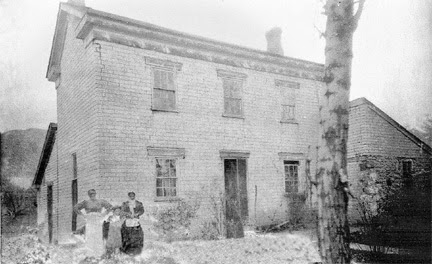
Above: Brigham City, Utah home of Simeon Dunn – designed similar to his former Nauvoo home!
After a while, one more room was added to their home, and a cook stove. Harriet did enjoy cooking on a stove instead of the fireplace. Then a caravan of Mormon immigrants came to Brigham City and Harriet brought a family into her home and gave them the new room, as it was the largest, with the stove in it. She went back and cooked in the fireplace until the family was able to get another room built.
On the first of December, 1857, Harriet and Simeon journeyed into Salt Lake City to be sealed for time and eternity in the Endowment House. It was an exciting time for them but the trip was tiring and long, and Harriet was in the last months of pregnancy. Soon after their return to Brigham City, Harriet gave birth to twins on Dec. 31, 1857. They were named Harriet Silver Dunn and Henry Silver Dunn. The mid-wife and neighbors did everything possible to help, but little Harriet died at birth. Two days later, on January 2nd, 1858, in the evening, Simeon saw that his wife was dying. The children were all in bed asleep, but he woke them one at a time and carried them to their mother’s bedside so that she could see them. She kissed each one and told Sophia to take good care of the other children and the remaining twin, Henry. Simeon buried her in a crude homemade casket with their tiny daughter in her arms. She had given her life for her family and religion.
Twice before Simeon had been called upon to lay away a devoted wife and companion, but this time his heart almost broke for grief. Sophia, at age eight, was the oldest child left at home. Mary, of course, was married to Martin Luther Ensign and Susannah had married Allen Hunsaker, and Betsy was married to Alpheus P. Haws. The three sisters came nearly every day to help Sophia with the babies.
INVASION OF JOHNSON’S ARMY
Three months later, in April 1858, the call came for the saints to leave their homes in northern Utah and journey southward in order to elude Johnston’s army. Like others in the community, Simeon loaded a few provisions and household effects into his covered wagon, assisted his motherless children onto the wagon box and cracking his long whip over the backs of oxen, commenced his journey. He also provided a wagon for Mary and her three little girls as Martin was away on a mission in England. It was a trying situation for all of them as they never expected to return to their homes, and did not know what or where their flight would lead. As they proceeded on their way, baby Henry became very ill.
They camped on Kay’s Creek (now Kaysville) and there they saw the life depart from their lovely three-month-old son and brother. Sophia had held him all the way, and when he died, she was heartsick. Simeon made his little family as safe and comfortable as possible in this temporary camp, and with a sad and heavy heart, slowly wended his way back to the lonely grave in the Brigham City Cemetery. Near to it he dug a very small grave and in it tenderly laid the remains of his baby son. He found the town empty, except for a few men who had remained behind, ready at a moment’s notice to touch a match to the homes and buildings if the enemy should enter the city. He returned to his house, expecting to spend the night there, but it was so quiet and lonely that it was more than he could endure, so he went to the stable, and laid down by his faithful oxen, and spent the night near them. Early the next morning he was on his way to rejoin his family.
While they were camped on Kay’s Creek, little Sophia had suffered so greatly that she took her younger brother’s hand (two-year-old Charles Oscar) and went for a walk. She was lost for hours. Just as it was getting dark, she could see smoke from campfires, but wasn’t sure they weren’t Indians. She hid Charles in the sagebrush and went to see if it was safe. She met her father coming on horseback looking for them. They returned to camp where everyone was safe and well. The next day they continued on their way south to Payson, where they made camp and remained until the government issued a manifesto offering amnesty to all of the “disloyal Mormons” and the saints were counseled by the church leaders to return to their homes.
Upon their arrival home, they found their house empty and all of their possessions gone.
ADDITIONAL MARRIAGES
Simeon married Elizabeth Wickham 15 April 1865 also in the Endowment House. To this union was born Ephraim Wickham Dunn who was born 27 March 1866. He died in 1927. Lorenzo Wickham Dunn was born 11 May 1868. He adied 3 August 1869.
Simeon married other plural wives. He was married to Abigail Brandon in 1858 by Brigham Young in President Young’s Salt Lake City office. He married Keziah Fowler on 14 January 1860 in the Salt Lake Endowment House. Simeon later married Mary McRee February 22, 1868 in the Endowment House.
CHURCH HISTORY AND MILESTONES
Ordained a Priest – 22 July 1839 by Stephen Post
Ordained an Elder – June 1840 in Van Buren, Michigan
Ordained a Seventy by Levi Ward Hancock in 1845 in Nauvoo. Served in the Nauvoo 15th Quorum of Seventy and became the senior president of the quorum.
Worked on the Nauvoo Temple
On 22 June 1840, Simeon received his patriarchal blessing in Nauvoo under the hands of Joseph Smith, Sr.
Spent the winter at Winter Quarters and while there outfitted another family with one wagon and one yoke of oxen for the first pioneer company that left for Utah.
Served as President of Seventy in Brigham City.
He was a faithful member of The Church of Jesus Christ of Latter-day Saints. He was a faithful husband and a loving and tender father.
MISSIONARY SERVICE
Served a mission to Canada in 1841 and then to New Yo9rk in 1844.
On October 21, 1850, Simeon, along with Elder Addison Pratt and his wife and family, Sidney Alvarus Hangs, and Jonathan Crosby arrived to serve in the Society Islands mission. These three Elders and Elder James S. Brown will always be closely associated with the early history of this mission. They continued their missionary work until 1853, when, on account of a change in the local government of the islands, the American Elders were banished from their fields of labor. Later the “Reorganites” (RLDS church) came among them and drew most of them away from the true Church.”
While Simeon was on his mission, his daughter Mary married Martin Luther Ensign on January 8, 1852 in Salt Lake City.
In 1873, he went on an another mission to the Eastern States.
Simeon records: “1 Nov 1877 I was privileged with a mission to St. George, Utah to officiate for my dead friends in the Holy Temple of our God.” On this mission, he was able to have many of his young deceased children sealed to him and his wives. Upon his return, he recorded “27 Jan 1878 I returned home having accomplished the desire of my heart for the present, in this direction for the time being I am now 75 years old.”
Simeon recorded in a journal entry, “Here (Brigham City, Utah), under the wise leadership of President Lorenzo Snow one of the twelve apostles, we have been greatly blessed both temporally and spiritually. On 19 October 1879 I left Brigham City on a mission to the States to hunt up genealogy of my relatives which proved a very successful mission. I returned in July having traveled 10,000 miles by rale and bote all in North America.
RESIDENCES IN THE WEST
Upon arrival in Utah in 1848, Simeon lived in Salt Lake City for about five years. He then moved to Brigham City, Box Elder County, Utah in 1853 after his return from his mission. Simeon helped to build the fort there and also helped guard it from the Indians. He remained in Brigham City the rest of his life.

Above: Simeon A. Dunn Portrait
FINAL TESTIMONY OF SIMEON
Further quoting Simeon On August 7, 1878

The following was written in a shaky hand and added later: “Before you is redeemed will suffer hardship and persecution. Mortals must return to the dust. Within the veil, anchored companionship, Dominion, kingdom power and principalities; I go away and prepare a place. It is an order everyone of you together. Don’t know how long we may survive but feel to bless and do good.” (this was presumed to have been written just prior to his death. (Recorded by E. D. Snow.)
DEATH OF SIMEON DUNN
Simeon Adams Dunn died February 20, 1883 in Brigham City at age 80.was buried in the cemetery in that city on the 24th of February 1883. His grave lies next to that of his wife, Harriet, and their two babies. He had been a farmer, missionary, guard, construction worker on the temple, pioneer, electioneer, president of the Seventies Quorum in Brigham City, and a faithful member of the Church of Jesus Christ of Latter-Day Saints. He was a faithful husband and the loving, tender father. Simeon’s life was one of trial and sacrifice, having filled 5 mission, lost 6 wives, and was mother and father to his children the greater part of the time. Truly he was tried in the furnace and came out pure gold!
Simeon’s obituary ended with this summary of his life: “He was full of zeal and fervency in the work of God, and quite marked for his straightforward manner. He was a practical, hard working and honest man, prompt in meeting all his obligations, careful and considerate in all of his ways. He was a faithful latter-day saint and highly respected.
HISTORIC PHOTOS AND CHANGES OF THE SIMEON DUNN HOME
The Nauvoo Simeon Dunn brick home has survived the test of time and has remained intact from the time of its construction in 1841 to the present. It is interesting to view the Dunn home as it has appeared through the years.
The place was in a good state of preservation in August 1941, when his grandson, Adams Wesley Ensign and his wife visited Nauvoo. The house, which was then occupied by an elderly couple, This couple showed Wesley and wife, the deed of conveyance to Simeon A. Dunn, signed by Joseph and Emma Smith and also a deed of conveyance from Simeon A. Dunn to them.

Above: Simeon A Dunn Home 1965 Photo (looking toward SW) from Church Archives
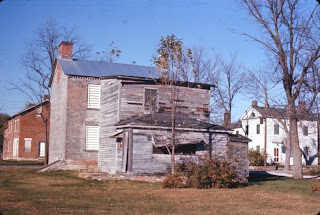
Above: Simeon A Dunn Home 1967 Photo (from south looking north … and note the Snow Ashby Duplex visible on the left and the Joseph Coolidge Home on the right). Photo from Church Archives.
From the photos, it appears that a wooden structure was added to the back side of the home in years subsequent to the original Dunn construction. Also, at one time, it had a wood canopy over and around the front door. These additions have since been removed through the restoration processes that have happened on the old home.
THE SIMEON DUNN HOME IN 1975
When I first saw the Simeon Dunn home in 1975, it was not overly impressive. It was kind of “worn” and “hammered” looking and had obviously sat vacant for many moons. Elder Shaltes and I took photos of the place.
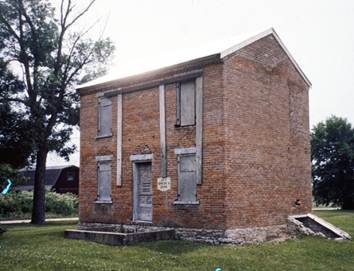
Simeon Dunn Home in 1975 Prior to Restoration (Photo by Kevin V. Hunt) And note that the limestone cellar shown on the right is still intact in the home even in 2025! This photo is taken from the front yard looking southeast.
Never did I think that I would one day live in this place. Gratefully, the place has been remodeled to be quite comfortable inside with its modern renovations.
THE RESTORATION OF THE SIMEON DUNN HOME IN NAUVOO
In the late 1970’s , much restoration of pioneer homes of old Nauvoo was conducted. Restoration was then managed by Nauvoo Restoration, Inc. (NRI). The NRI organization (after I served in Nauvoo in 1975) contacted various Dunn family descendants with an invitation to assist in the restoration of their family home. Many family members contributed to the home restoration.
It is not known exactly the process or timetable of the restoration on the Dunn home. The exterior restoration must have begun before 1975 when I arrived first in Nauvoo. Often in the restoration process, porches and building add-ons (after the original Nauvoo era) are removed to return the structures back the “way they were”. Such was the case with the Dunn home. By 1975, the porch and rear additions to the Dunn home had been removed.
I am not sure when other exterior restoration work was done on the home. It must have taken place, however, between 1976 and 1982. It had not started when I was here in 1975 but it must have been completed by August 14, 1982. On that date in August 1982, President Gordon B. Hinckley, then 1st Counselor in the First Presidency formally dedicated 11 Nauvoo homes and shops.

The undated and the publishing entity is not mentioned, but the article states that the Dunn home was one of the eleven homes dedicated on that day. It is interesting to me that the home was actually dedicated since it was not a “show home”.
The Dunn home has a book in which Dunn family members sign as they visit. In the back of the book there is note from an Elder Horace K. Walker. He must have been the Nauvoo senior missionary who completed inside restoration and remodeling in the Dunn Home. He must have completed his work before the August 1982 home dedication. And it appears that he returned 20 years later to Nauvoo and had opportunity to again check out his previous work (since he signed the book in 2002). Maybe he came to Nauvoo for the Temple Dedication that year. A Google search revealed that Elder Walker died the following year – in 2003. His obituary notes that he had been a long-time shop teacher in a high school. That role probably gave him a lot of skills for his Dunn project.

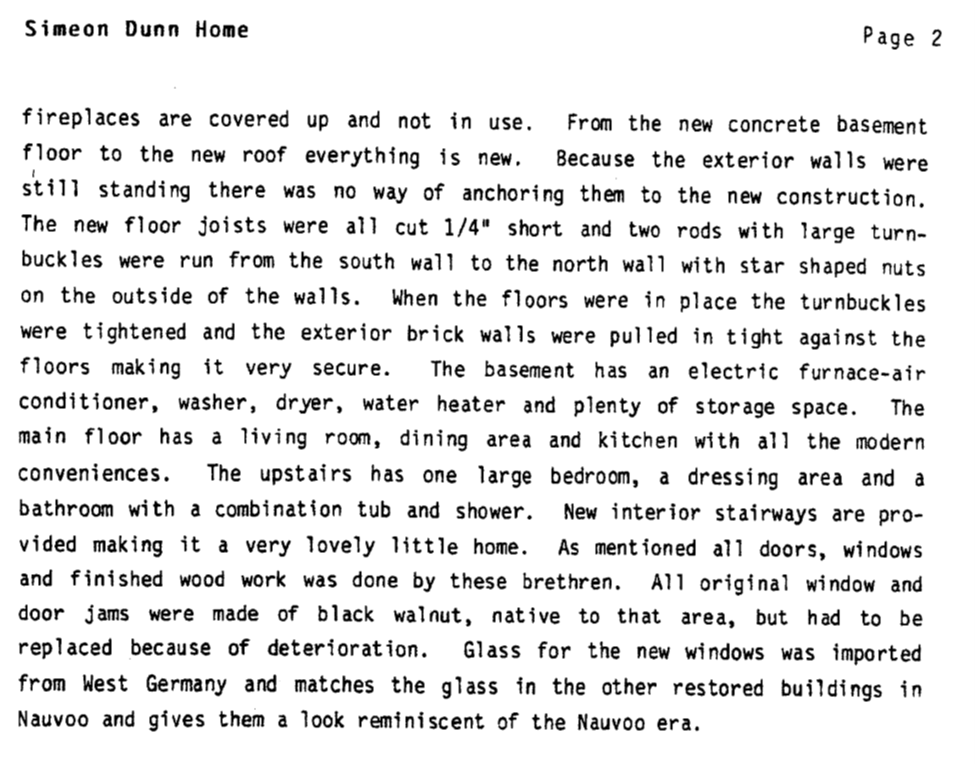

The timing of the restoration is also of interest. My in-laws, Elder and Sister E.H. and Verna Belcher served for two and a half years as missionaries in Nauvoo. They served in Nauvoo from April 1979 through October 1981. Elder Walker and Elder Belcher must have been in Nauvoo at the same time and likely would have known each other well. Elder and Sister Belcher were assigned to serve in the restored Lucy Mack Smith home. The Lucy Mack Smith home is located just a short block north of the Simeon Dunn home.
Their original mission call was for a year and a half and then they received two more 6-month extensions. During this time, Elder Belcher researched and created the now famous Nauvoo Brickyard. He designed and began firing the Original Nauvoo souvenir brick that has now been handed out to Nauvoo guests for 45 plus years.
And at the time, the Joseph Coolidge house, located “kitty corner” across from the Simeon Dunn home, was facing destruction because of the dilapidation evident on the backside of the building. Elder Belcher received permission to save and to restore the Coolidge home. He did his work at the same time as Elder Walker was working across the street at the Dunn home. Elders Belcher and Walker likely talked together about their projects and may have even collaborated together at times. How cool is that?
THE DUNN HOME SPICE BOX
As work was being done in the Dunn home (maybe by Elder Walker?) an old spice can was foun. This is a circular wooden box. The box holds several small cans (also wood) that can contain various spices.
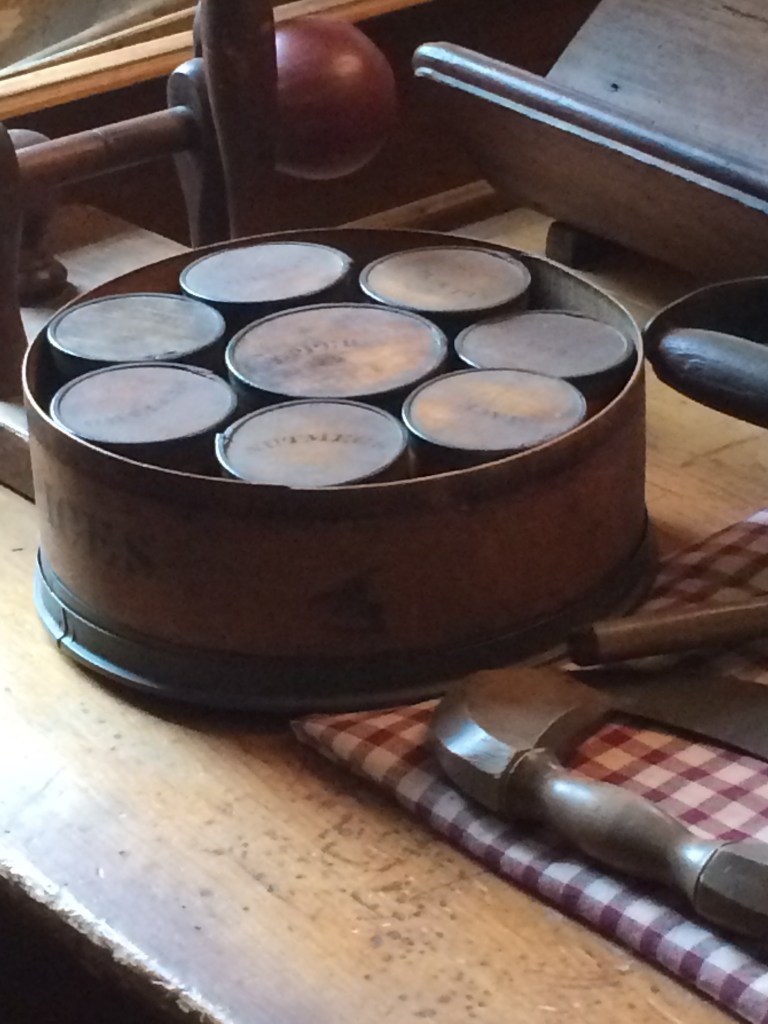


It wasn’t in the Bakery in 1975, however. When I was here back then, the Scovil Bakery was still under reconstruction/restoration. In fact, I have in-process photos of the Scovil reconstruction project.
THE MODERN DUNN HOME INTERIOR PHOTOS


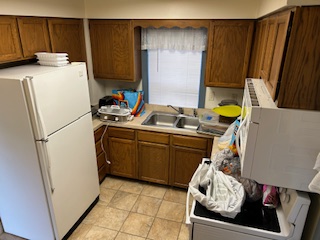
TOURING THE DUNN HOME
As Sister Hunt and I began occupation of the Dunn home, it had for many years been used as a residence for couple missionaries and it had been previously noted that “upon request a personal tour can be arranged by contacting the current resident missionaries.” I guess that process was more formalized then. We have people who come to the place but it is never by appointment or prior arrangement with us.
ELDER AND SISTER HUNT GET THE OPPORTUNITY TO LIVE IN THE DUNN HOME
A couple of weeks before we entered the MTC in preparation for our mission, we received notice that we would be assigned to the Simeon A Dunn home. This notice came via an email message to us:
| Illinois Historic Sites | Wed, Mar 13, 2:27 PM | ||
| to me | |||
The housing that has been assigned to you while you are here in Nauvoo will be Simeon Dunn
780 Parley
Nauvoo, IL 62354
Remember this is not your mailing address, but it is where you will come when you arrive from the MTC. Your district leader will meet you there with a key and able bodies to help you move in. Your training couple should be reaching out to you either while you are at the MTC or while you begin your drive.
It has one bedroom with one queen-size bed and one bathroom. It is furnished with basic kitchen items. Enjoy your MTC experience. If you have any other questions, please let me know.
Sister Stringham
Secretary
Illinois Historic Sites
THE DUNN HOME BECOMES THE NAUVOO MISSION HOME FOR KEVIN AND LOU


In a previous blog, I shared our experiences in hosting and welcoming Dunn family progeny into “their” family home. In that blog article, I said:
DUNN FAMILY VISITORS
We’re finding that being a Dunn family descendant is quite the thing. I guess years ago, per some of our visitors, the Church invited Dunn family members to contribute to the restoration of their ancestral home – and many did.
Now all of these years later, the Dunn family members have spread the word – the tradition of the Nauvoo home. And when any Dunnite gets here, they all want to check out the family home. When folks have announced their Nauvoo trip, Grandma always tells them “make sure that you go see “our Dunn home”. And being true to Grandma, many want to see the place.
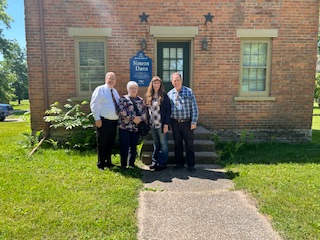
I have said before, “We can always spot a Dunn descendant. They drive up to the front of the house and they sit there in awe in their vehicles. Some will snap a quick shot out of the front car window. They are a dead giveaway. On such occasions, we always hurry outside and invite the folks in to see the house. The folks are always in awe of a rather small and plain-looking living room and kitchen. In this room, we do point out the boarded-up area where the fireplace would have existed.
“We take them up the stairs to the rather normal – L-shaped bedroom (complete with a “dressing area” – where we have a rack with our many Nauvoo costumes). The three old dressers – with mirrors – are kind of unique but are likely not “of the period”. The bathroom is just like any other. But, with all of these “unique features”, the folks are just in awe and act so excited and grateful to see their Dunn home.
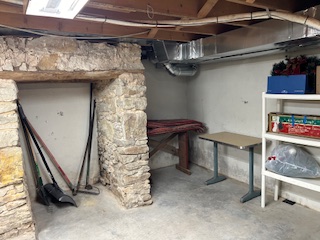
“We then take our guests down into the cellar. Here it gets a bit more interesting. The whole basement has been plastered so it does not look at all 1845’ish. We do show them the original limestone fireplace foundation and they all think that this is so cool. Then our final “Wow” is the stairs that exit up from the basement to the world above (and I think I’ve shared a photo of this in a previous blog).
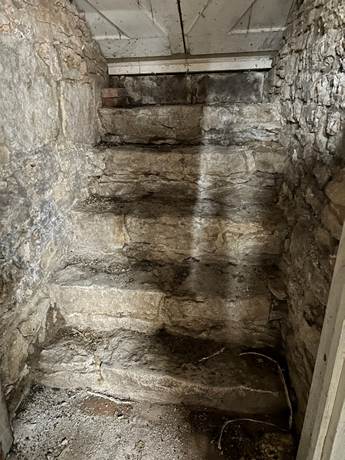
Above: Original limestone cellar walls and steps in the Dunn home
The steps are the original limestone – as are the rocks that line the sides. Folks always get a kick out of getting a photo of themselves coming up out of the cellar (with the photo being taken from up top and looking down).
And then, our final act is to invite them to sign the Dunn family book. This becomes a ceremonial treat as they sign their name – just as many Dunns have been doing – since 1982. I always get a laugh at their entries – as they each try to explain how “great” they are (meaning how many generations down they are from the legendary Simeon A. Dunn). Then most folks want a “real” photo out front with the sign (without fear that they will be discovered out on our lawn).

In the short time that we have been in the Dunn home, we have had fifteen or more different families who have met the above qualifications and with whom we have shared the home. Being the Nauvoo Miracle for these folks is always fun as we experience how overjoyed they are with the experience and the home.
SIGNING THE DUNN FAMILY BOOK AT THE HOME
A great-grandson, Leslie Smith Dunn, Jr. and his wife Marion of Brigham City, Utah, placed a registration book in the home (1982) to be signed with name and address – by descendants of Simeon Adams Dunn.
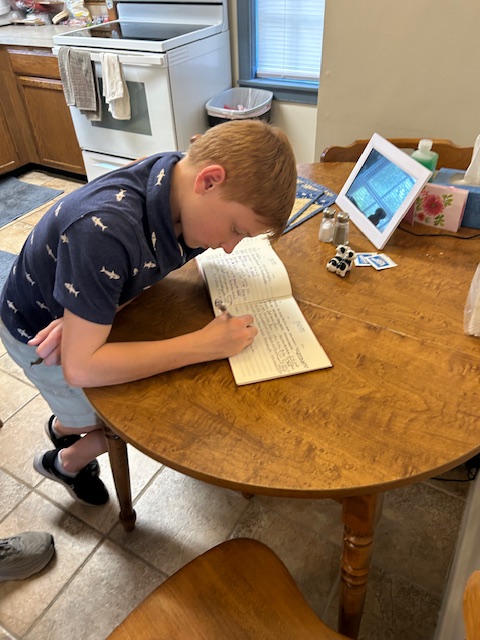
It was delightful to have our Mission Leaders, Elder and Sister Mehr, in our home. Upon arrival, they were curious about our little home. We gave them a tour and they seemed to enjoy this. I showed Sister Mehr the log (of 25 years) wherein Dunn family progeny sign in after visiting their ancestor’s home and she was intrigued. She9999 found several semi-famous people she had known. The log is fun … it has names, dates, addresses, and often a long string of “greats” as people try to explain how they are related to the pioneer Simeon.

Elder Kevin Hunt in front of the Simeon Dunn Home
Simeon A. Dunn … I have come to believe that he was a great man. He suffered through many hardships with the deaths of six wives and many young children. He was a great missionary. It appears that he lived a wonderful life – in spite of the challenges.
Sister Hunt and I are grateful for Simeon’s Nauvoo home. We are very much enjoying our time here in the home. We feel it is a special place and we are honored to carry on his legacy. Thank you, Simeon! We are grateful to you for your beautiful home.
 On the Nauvoo Trail

This is very cool. He was my Great, Great, Great (I think that is the right number of greats) Grandfather.
LikeLike